Design studio faq One Page Template


Edit Template Offline
2. Create new page and search for id 6333468
Edit Template Online
Create Awesome Websites


Free Nicepage Builder
Keywords
The FAQ Journey Moves from Introduction to Location
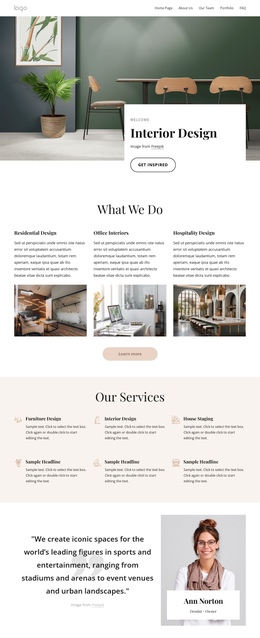
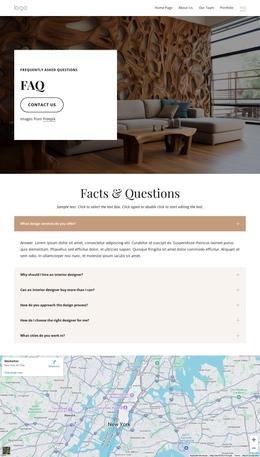
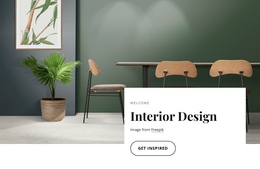
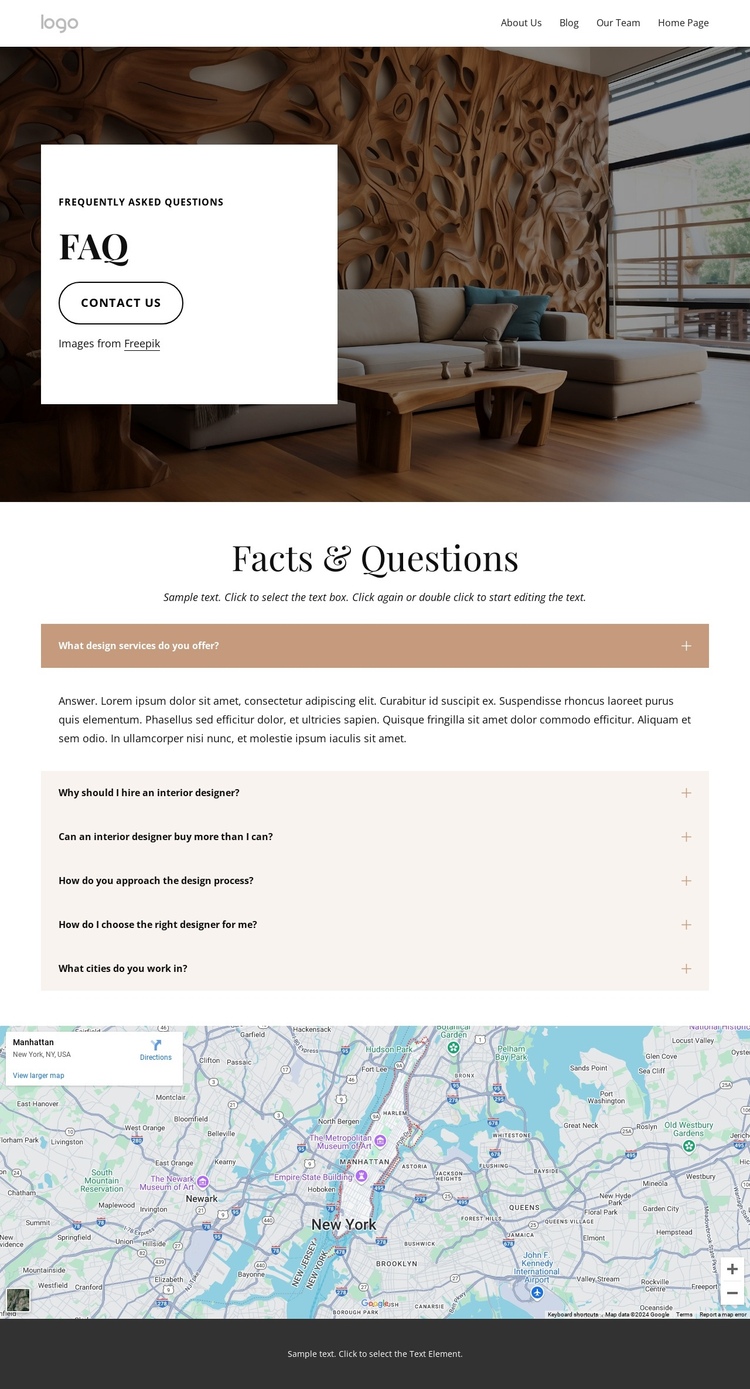
The section sequence supports a continuous one-page visit rather than scattering the information across separate destinations. The navigation first identifies the FAQ alongside Home, About Us, Our Team, and Portfolio. From there, the interior photograph creates a visual introduction, while the FAQ title and Contact Us action tell visitors what the page contains and where an interaction can begin.
The Facts & Questions section supplies the main content journey. Its six expandable rows divide common interior design concerns into individual destinations within the same document, so visitors can move through service, process, designer-selection, purchasing, and location-related questions without losing the page context. Because the answers are contained in an accordion, the sequence remains visually manageable even though the page addresses several topics.
The map then extends the journey from general information to geographic reference, centered on New York, before the dark footer signals the end of the document. This gives the page several meaningful stages: orientation, visual introduction, question exploration, location context, and closure. The Contact Us action works within that sequence as a response opportunity, but the primary organizational value comes from how multiple content areas remain connected on one continuous page.
Customize with Nicepage
Open this ready-made template in the One Page Template Builder and customize it visually in the Nicepage editor. Replace demo content, edit page sections, and adapt the design to your project without rebuilding the template from scratch.
Build a Navigable One-Page Website
Connect the Menu to Page Sections
Organize the website as a sequence of sections on a single page and use the Menu For One-Page Site to connect menu items with individual page Blocks. Visitors can jump directly to sections such as About, Services, Testimonials, or Contact without opening separate pages.
Keep the Website on One URL
A one-page template can combine several parts of a small website within one continuous page. Arrange the Header, introduction, services, portfolio, company information, reviews, contact details, and other relevant sections in the order that fits the project while keeping them accessible through the same page navigation.
Make Long Pages Easier to Navigate
For longer one-page websites, keep navigation labels short and connected to meaningful sections so visitors can move through the page without relying only on scrolling. You can also use the Back To Top element to provide a quick way back to the beginning after longer sections.
This workflow makes the template suitable for compact websites that need several distinct content sections while keeping the complete visitor experience on one URL.