Brand Identity One Page Template


Edit Template Offline
2. Create new page and search for id 6169217
Edit Template Online
Create Awesome Websites


Free Nicepage Builder
Keywords
Projects, About, and Contact Create a Continuous Page Journey
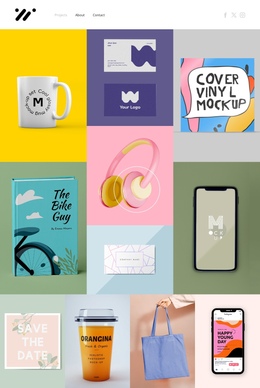
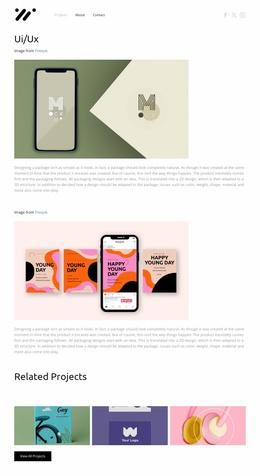
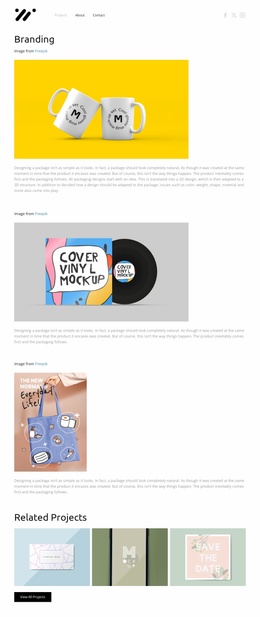
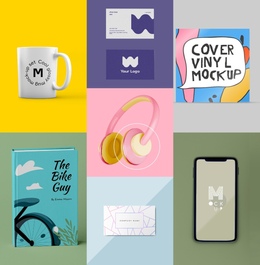
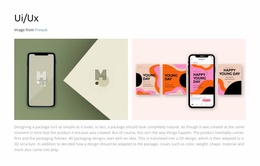
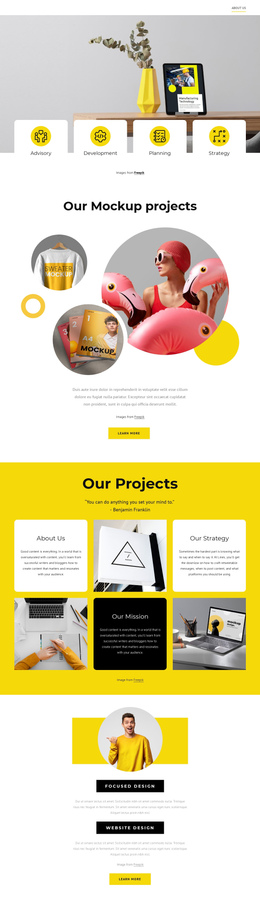
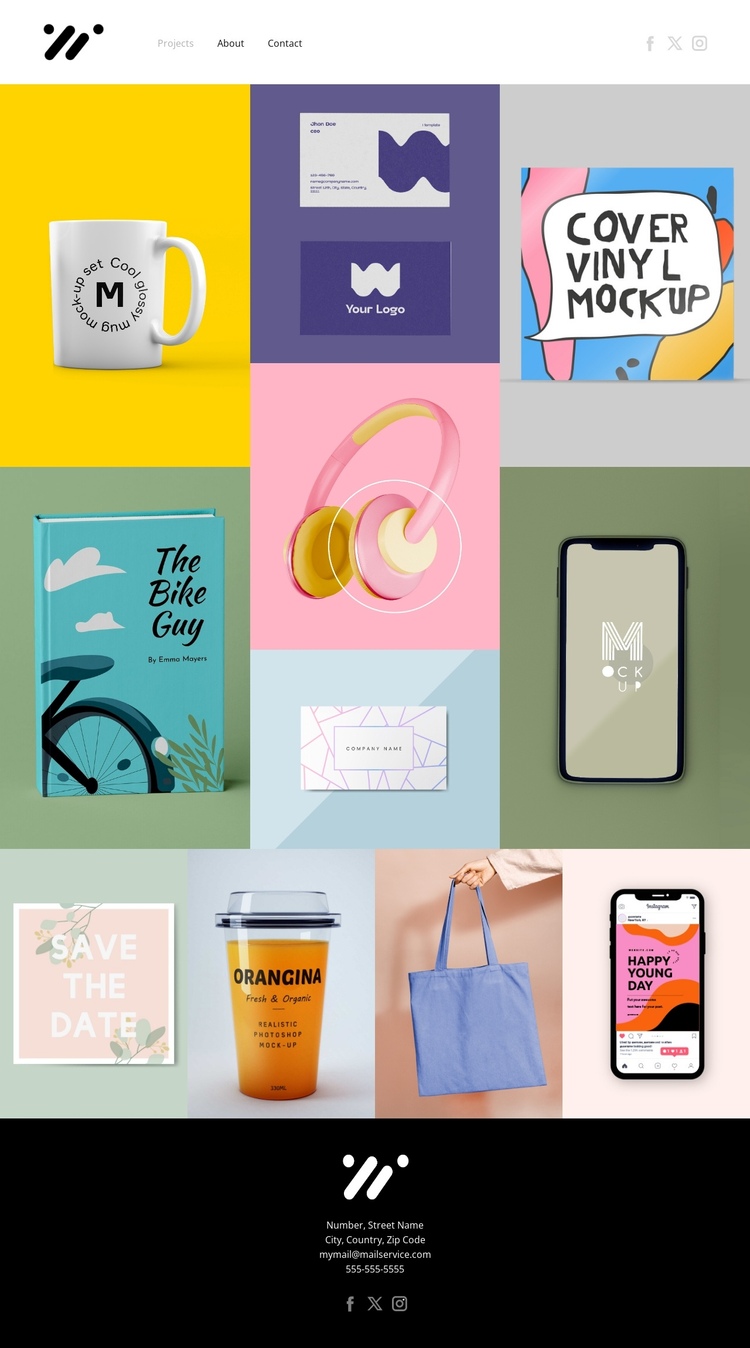
The page’s content can be understood as a compact sequence of destinations within one continuous document. The two image groups give the Projects area an internal progression: the seven-image collage opens the presentation with varied, stacked visual panels, and the four-image row follows with a simpler horizontal arrangement. This change in density lets visitors move from a broad project impression to a more orderly second set of examples without leaving the page.
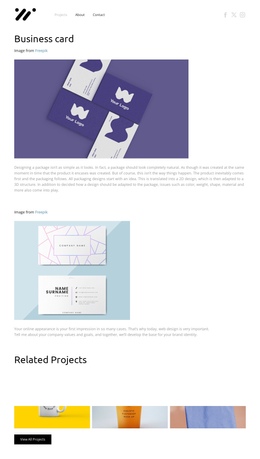
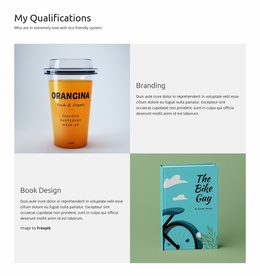
The navigation reinforces that sequence through Projects, About, and Contact, while the Projects menu separates Branding, UI/UX, and Business card interests. These categories provide meaningful content directions even though the analysis does not verify anchor links or separate page URLs. Social links in the header and footer give the same page additional outward routes, and the dark footer acts as a clear closing destination with centered branding and contact information. The layout is therefore suited to a one-page interpretation based on content movement: project imagery comes first, category context is available through navigation, and contact information closes the experience. Its value is not limited to a single action; it is the way several related portfolio areas remain accessible inside one compact page structure.
Customize with Nicepage
Open this ready-made template in the One Page Template Builder and customize it visually in the Nicepage editor. Replace demo content, edit page sections, and adapt the design to your project without rebuilding the template from scratch.
Build a Navigable One-Page Website
Connect the Menu to Page Sections
Organize the website as a sequence of sections on a single page and use the Menu For One-Page Site to connect menu items with individual page Blocks. Visitors can jump directly to sections such as About, Services, Testimonials, or Contact without opening separate pages.
Keep the Website on One URL
A one-page template can combine several parts of a small website within one continuous page. Arrange the Header, introduction, services, portfolio, company information, reviews, contact details, and other relevant sections in the order that fits the project while keeping them accessible through the same page navigation.
Make Long Pages Easier to Navigate
For longer one-page websites, keep navigation labels short and connected to meaningful sections so visitors can move through the page without relying only on scrolling. You can also use the Back To Top element to provide a quick way back to the beginning after longer sections.
This workflow makes the template suitable for compact websites that need several distinct content sections while keeping the complete visitor experience on one URL.