Link Building One Page Template


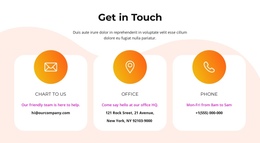
The “Get in Touch” Group Creates a Clear Page Destination
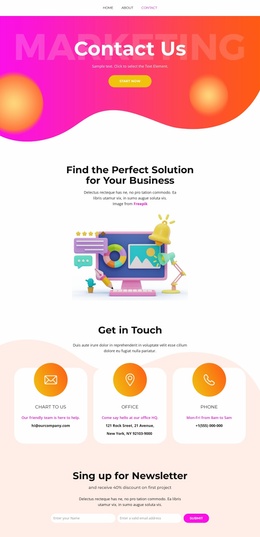
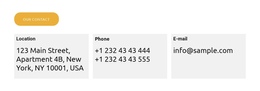
A continuous one-page layout benefits from sections that can be recognized quickly, and this block has that identity through its “Get in Touch” heading, supporting paragraph, and three aligned contact cards. The introduction signals what information belongs here, while the card row divides the destination into email, office address, and phone channels. Each card uses the same icon-above-text pattern, so the three options remain related without becoming one dense contact paragraph.
The soft peach background and large curved shapes help mark the boundaries of this destination as visitors move through neighboring sections. White rounded cards create a separate layer for the practical details, and their horizontal alignment gives the contact area a balanced ending or transition within the page flow. Since the interaction is static, the section communicates its role immediately rather than asking visitors to open tabs or move through a carousel.
In a broader one-page project, this block could sit near the middle or end of the continuous content journey, with other sections handling introductions, services, proof, or additional information. The block supplies a meaningful destination, but it does not establish navigation by itself. If the surrounding page uses section-based navigation, Nicepage’s Menu For One-Page Site can connect page-level menu items to meaningful blocks such as this contact area.
Customize with Nicepage
Open this ready-made template in the One Page Template Builder and customize it visually in the Nicepage editor. Replace demo content, edit page sections, and adapt the design to your project without rebuilding the template from scratch.
Edit Template Offline
2. Create a new page or select existing
3. Click Add new block, search for id 4376900 and click enter
Edit Template Online
Create Awesome Websites


Free Nicepage Builder
Keywords
Use This Block as a Section in a One-Page Website
Give the Block a Distinct Content Role
A one-page website combines several meaningful content sections within one continuous document. A block can serve as one of those destinations—for example About, Services, Gallery, Testimonials, Pricing, Team, or Contact—while other blocks provide the rest of the page journey.
Connect Navigation to Meaningful Sections
When the final page uses section-based navigation, Menu For One-Page Site can connect menu items to individual page Blocks. The analyzed block does not prove that anchor navigation already exists; it simply provides one possible destination when its content is substantial enough to stand as a recognizable section.
Keep Longer Pages Easy to Explore
For long one-page sites, Back To Top can help visitors return to the beginning after moving through several sections. Navigation behavior is managed at the page level, while each block retains its own content function.
This workflow positions the block as one part of a continuous one-page experience rather than treating a single section as the entire one-page site.