Follow us on Facebook and Twitter One Page Template


A Distinct Social Destination in Continuous Page Flow
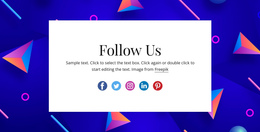
The “Follow Us” heading gives this block a clear identity as a social-media destination within a longer continuous page. One supporting paragraph adds context on the left, while five circular platform links occupy the right: Facebook, Twitter, Instagram, LinkedIn, and Google+. This division lets the section stand apart from neighboring content without requiring it to become a separate page or carry the full information architecture of the site.
The two-column row also creates a useful change of rhythm in a one-page layout. Text remains left aligned, the social icons remain right aligned, and vertical centering keeps the regions balanced across the section. The light gray background can visually mark the transition into this social area, while the colorful icons provide immediate recognition of the destinations. Generous horizontal spacing keeps the section open rather than compressing the links into the paragraph.
As one content destination, the block could sit near the end of a continuous page after core information, portfolio content, or contact material. Navigation behavior belongs to the containing page, but the section itself supplies a recognizable target for visitors seeking social channels. Its contribution is therefore informational and navigational in context: it gives the page journey a dedicated social stop while preserving the same reusable block structure.
Customize with Nicepage
Open this ready-made template in the One Page Template Builder and customize it visually in the Nicepage editor. Replace demo content, edit page sections, and adapt the design to your project without rebuilding the template from scratch.
Edit Template Offline
2. Create a new page or select existing
3. Click Add new block, search for id 42437 and click enter
Edit Template Online
Create Awesome Websites


Free Nicepage Builder
Keywords
Build a Navigable One-Page Website
Connect the Menu to Page Sections
Organize the website as a sequence of sections on a single page and use the Menu For One-Page Site to connect menu items with individual page Blocks. Visitors can jump directly to sections such as About, Services, Testimonials, or Contact without opening separate pages.
Keep the Website on One URL
A one-page template can combine several parts of a small website within one continuous page. Arrange the Header, introduction, services, portfolio, company information, reviews, contact details, and other relevant sections in the order that fits the project while keeping them accessible through the same page navigation.
Make Long Pages Easier to Navigate
For longer one-page websites, keep navigation labels short and connected to meaningful sections so visitors can move through the page without relying only on scrolling. You can also use the Back To Top element to provide a quick way back to the beginning after longer sections.
This workflow makes the template suitable for compact websites that need several distinct content sections while keeping the complete visitor experience on one URL.