Business analyst job One Page Template



Edit Template Offline
2. Create new page and search for id 2025894
Edit Template Online
Create Awesome Websites


Free Nicepage Builder
Keywords
The Section Sequence Creates Several One-Page Destinations
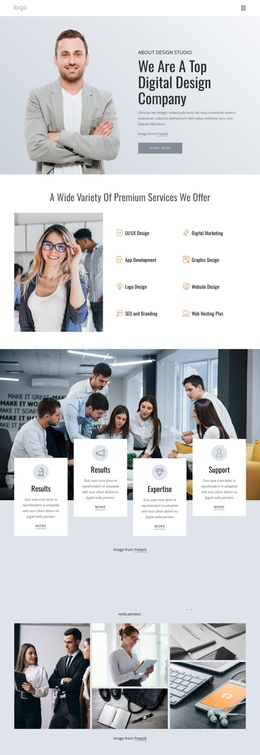
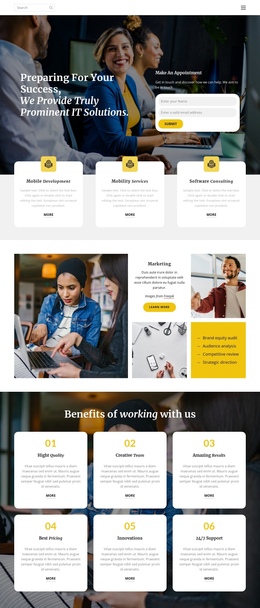
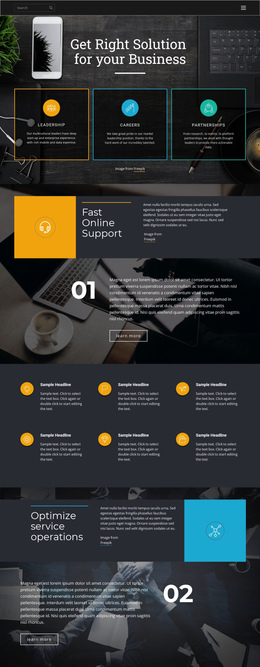
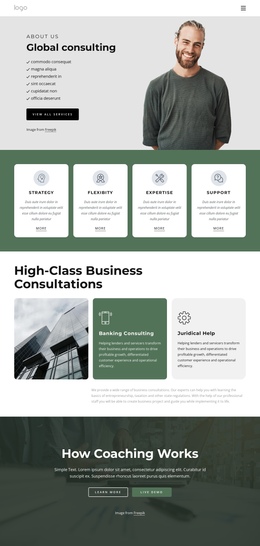
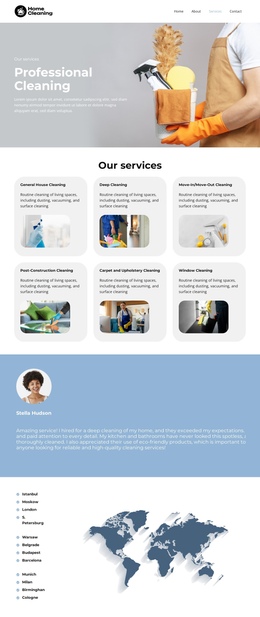
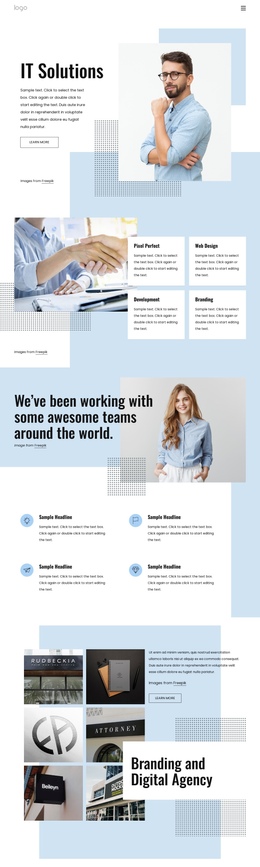
The design contains enough distinct content regions to support a continuous one-page journey rather than forcing every idea into one undifferentiated scroll. The header presents Home, About, and Contact as visible navigation labels, and the opening consulting introduction gives visitors a clear starting point. From there, the three capability cards create a first destination for Development, Design projects, and New materials, with their numbered format making the group easy to recognize.
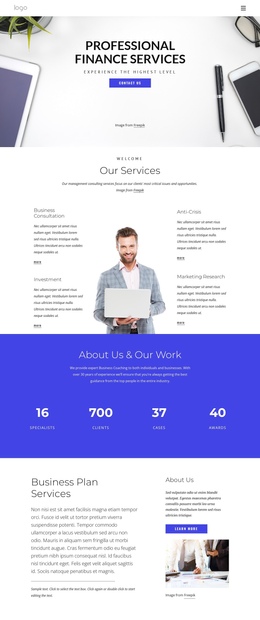
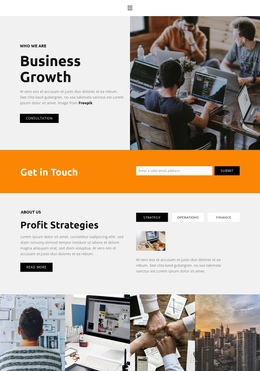
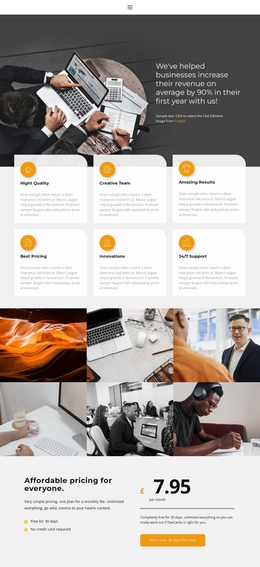
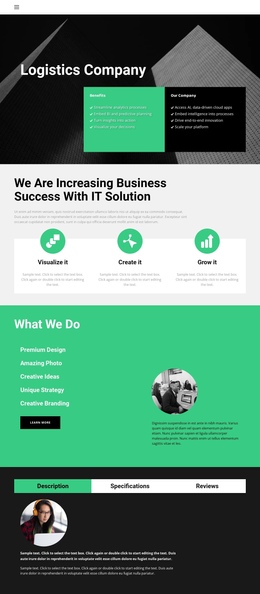
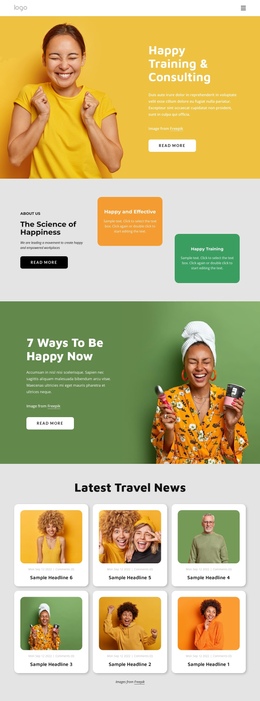
The middle sequence changes subject without leaving the document. Supporting text leads to the team portraits, then the two testimonial cards shift attention toward customer feedback. Three metric cards provide a compact proof-oriented stop, while the accordion offers a denser destination for strategy, design, and development details. The brands band and social section continue the page with showcase and engagement content rather than repeating the earlier service presentation.
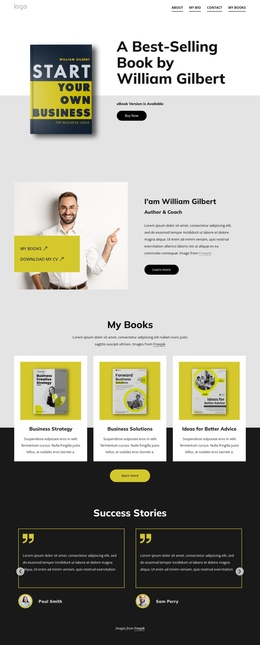
Near the end, the contact region gathers phone, email, and location information before the footer closes the experience. This ordering gives the page multiple meaningful destinations: introduction, capabilities, professionals, feedback, details, brands, social links, and contact. It does not require an unsupported claim that anchor navigation already exists. If the project needs section-based navigation, Nicepage’s Menu For One-Page Site is a relevant optional bridge for connecting menu items with page Blocks.
Customize with Nicepage
Open this ready-made template in the One Page Template Builder and customize it visually in the Nicepage editor. Replace demo content, edit page sections, and adapt the design to your project without rebuilding the template from scratch.
Build a Navigable One-Page Website
Connect the Menu to Page Sections
Organize the website as a sequence of sections on a single page and use the Menu For One-Page Site to connect menu items with individual page Blocks. Visitors can jump directly to sections such as About, Services, Testimonials, or Contact without opening separate pages.
Keep the Website on One URL
A one-page template can combine several parts of a small website within one continuous page. Arrange the Header, introduction, services, portfolio, company information, reviews, contact details, and other relevant sections in the order that fits the project while keeping them accessible through the same page navigation.
Make Long Pages Easier to Navigate
For longer one-page websites, keep navigation labels short and connected to meaningful sections so visitors can move through the page without relying only on scrolling. You can also use the Back To Top element to provide a quick way back to the beginning after longer sections.
This workflow makes the template suitable for compact websites that need several distinct content sections while keeping the complete visitor experience on one URL.