Get the hottest styles Landing Page
Edit Template Offline
2. Create new page and search for id 243942
Edit Template Online
Create Awesome Websites


Free Nicepage Builder
Keywords
Fashion Photography Moves Visitors Toward Further Inspiration
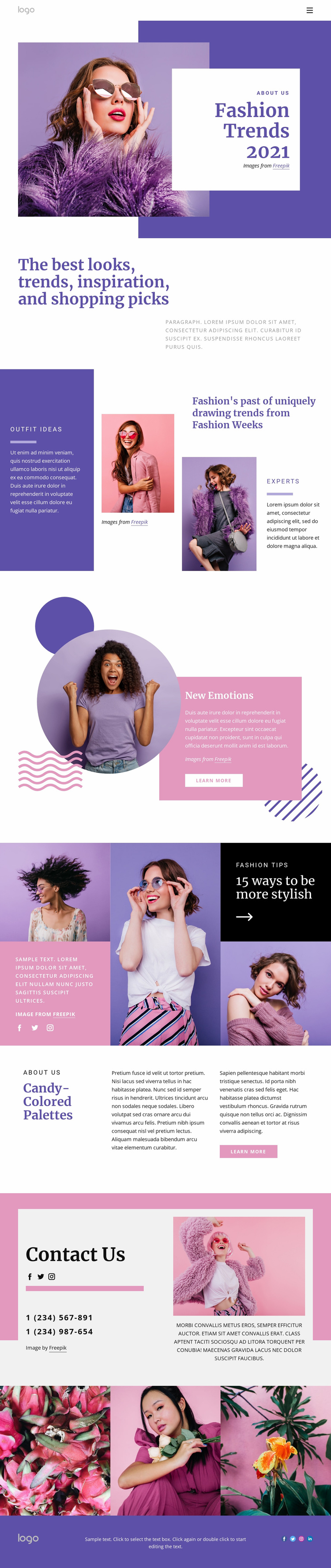
The opening hero gives the page an immediate subject and visual promise: a large fashion photograph is paired with the “Fashion Trends 2021” heading, a white text card, and a purple geometric background. That first impression can lead naturally into the broader editorial headline about looks, trends, inspiration, and shopping picks. Instead of presenting disconnected features, the sequence moves from recognition of the fashion theme toward reasons to continue exploring.
The Fashion Week section adds context through outfit ideas, an accompanying image, and an experts panel. This creates a form of editorial support before the “New Emotions” feature introduces another portrait-led story and a Learn more button. The button is the clearest verified response point in the design, so it can serve as the primary next step when the page is adapted for a focused campaign. The later “15 ways to be more stylish” section can reinforce interest by offering practical fashion guidance through several images and contrasting text panels.
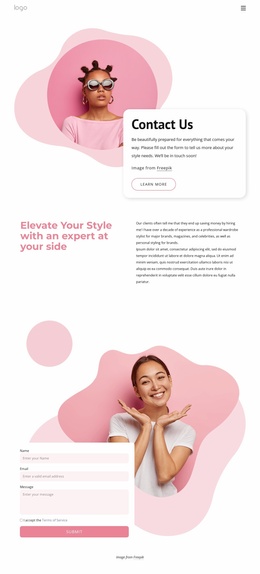
The contact area and three-image gallery should support, not compete with, that path. Contact details and social links provide secondary ways to continue the relationship, while the gallery reinforces the visual subject near the end. Because the supplied analysis confirms a Learn more action but not a specific commercial transaction, the page should be framed around exploring fashion content rather than an invented purchase or signup goal.
Customize with Nicepage
Open this ready-made template in the Landing Page Builder and customize it visually in the Nicepage editor. Replace demo content, edit page sections, and adapt the design to your project without rebuilding the template from scratch.
Build a Landing Page Around One Conversion Goal
Focus on One Primary Action
Use the landing page to guide visitors toward one measurable response, such as requesting a quote, registering, subscribing, booking a consultation, applying for a service, or submitting an inquiry. Keep the primary call-to-action consistent across the important sections so the headline, supporting content, form, and CTA buttons work toward the same campaign goal instead of competing for attention.
Capture Leads With a Form
Use the Contact Form Element to add a contact, subscription, application, or other conversion form directly to the landing page. Customize the form fields, layout, labels, inputs, and button to collect the information required for your campaign while keeping the form focused on the action you want visitors to complete.
Nicepage also provides several form submission options. Form submissions can be sent to Email, stored as Leads, added to Google Sheets, passed to a custom URL or server endpoint, or used to populate a MailChimp mailing list. This provides practical options for collecting inquiries, registrations, subscriptions, applications, and other campaign responses.
Manage Leads and Campaign Responses
When submissions are stored as Leads, you can use Contact Form Leads to review the information collected through the landing page and use it for follow-up. Keep the form connected to the same offer and primary CTA presented throughout the page so visitors move from the campaign message to a clear conversion action.
This workflow makes the template suitable for landing pages where the offer, content, call-to-action, form, and lead collection process work together toward one defined conversion goal.

More from Fashion & Beauty Landing Pages
-
Free Website Builder SoftwareDownload