Six small texts Landing Page


Six Feature Points Can Clarify the Offer Before the Response Stage
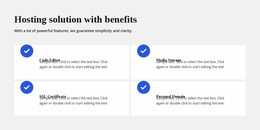
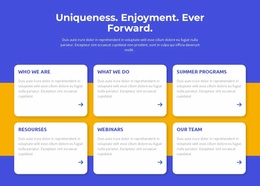
The heading gives a landing-page sequence a clear subject: IT Solution Strategy Development For Your Business. The six repeated descriptions can then work as a benefits or explanation stage, turning a broad strategy proposition into several concise information points. Their two-column arrangement keeps the explanation compact, while the icon markers and green accent bars help visitors distinguish one point from the next. This provides substance without introducing a competing interaction inside the section.
Because the block is static and contains no confirmed form or action control, its strongest conversion role is supportive. It can help a visitor understand what the offering covers before a later button, inquiry area, or other response point asks for action. The heading creates the promise, and the repeated descriptions provide context that may help the next stage feel more informed. The section’s visual order also makes it suitable for a middle position after an introduction and before proof, pricing, or contact content.
The two columns contribute to that sequence by limiting the vertical length of the explanation. Six points remain present and comparable, while the white background and black text prevent the section from feeling visually overloaded. Green markers create a consistent path through the content and give the feature group a recognizable identity. Within a focused landing-page journey, the block therefore explains and organizes the offer, leaving the primary response responsibility to a separately placed action element.
Customize with Nicepage
Open this ready-made template in the Landing Page Builder and customize it visually in the Nicepage editor. Replace demo content, edit page sections, and adapt the design to your project without rebuilding the template from scratch.
Edit Template Offline
2. Create a new page or select existing
3. Click Add new block, search for id 2192116 and click enter
Edit Template Online
Create Awesome Websites


Free Nicepage Builder
Keywords
Build a Landing Page Around One Conversion Goal
Focus on One Primary Action
Use the landing page to guide visitors toward one measurable response, such as requesting a quote, registering, subscribing, booking a consultation, applying for a service, or submitting an inquiry. Keep the primary call-to-action consistent across the important sections so the headline, supporting content, form, and CTA buttons work toward the same campaign goal instead of competing for attention.
Capture Leads With a Form
Use the Contact Form Element to add a contact, subscription, application, or other conversion form directly to the landing page. Customize the form fields, layout, labels, inputs, and button to collect the information required for your campaign while keeping the form focused on the action you want visitors to complete.
Nicepage also provides several form submission options. Form submissions can be sent to Email, stored as Leads, added to Google Sheets, passed to a custom URL or server endpoint, or used to populate a MailChimp mailing list. This provides practical options for collecting inquiries, registrations, subscriptions, applications, and other campaign responses.
Manage Leads and Campaign Responses
When submissions are stored as Leads, you can use Contact Form Leads to review the information collected through the landing page and use it for follow-up. Keep the form connected to the same offer and primary CTA presented throughout the page so visitors move from the campaign message to a clear conversion action.
This workflow makes the template suitable for landing pages where the offer, content, call-to-action, form, and lead collection process work together toward one defined conversion goal.

More from Text Blocks
-

-

-
-
-
-
-
-
-
-
-
Free Website Builder SoftwareDownload
-
-
-
-
-
-
-
-
-
-