The perfect combination of interior design and architecture HTML Template


Nine Project Tiles Form a Ready-Made Static Portfolio Section
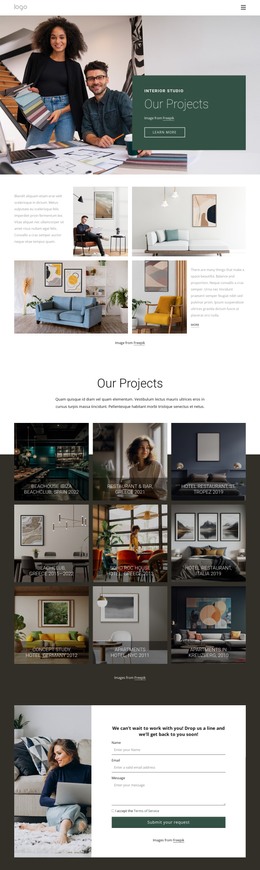
The centered “Our Projects” heading and supporting paragraph establish the purpose of the section before the images begin. This introduction is contained in a white panel, creating a clear visual transition into the darker charcoal area that holds the portfolio. The change in background separates explanation from project presentation without requiring another page-level structure.
Within the portfolio area, nine repeated image tiles are arranged in three columns and three rows. Their consistent rectangular proportions and narrow gutters create an orderly presentation for interior and hospitality project imagery. Dark translucent overlays sit near the lower edge of each tile, providing a shared label treatment that keeps project names legible without fully covering the photographs. The repeated arrangement makes the block suitable for a static HTML page that needs a defined projects section rather than an unstructured image collection.
The section can be placed between other static page areas while the surrounding HTML page supplies navigation, additional content, and footer material. Its static interaction keeps the visual sequence predictable: visitors see the introductory context, scan the nine labeled projects, and reach the attribution link below the grid. Nicepage’s HTML Export can support the containing static project, while this block remains one ready-made portfolio section within it.
Customize with Nicepage
Open this ready-made template in the HTML Builder and customize it visually in the Nicepage editor. Replace demo content, edit page sections, and adapt the design to your project without rebuilding the template from scratch.
Edit Template Offline
2. Create a new page or select existing
3. Click Add new block, search for id 6058619 and click enter
Edit Template Online
Create Awesome Websites


Free Nicepage Builder
Keywords
Use This Block in a Static HTML Page
Start With a Ready-Made Section
A block provides one prepared content area that can be combined with other sections to build a static HTML page. Customize its text, images, spacing, colors, and other elements in the Nicepage editor while keeping the block focused on its own purpose, such as services, testimonials, pricing, contact information, or visual presentation.
Export the Containing HTML Project
When the page or website that contains the block is ready, use HTML Export to create the files required for a static HTML project. The export applies to the containing page/site rather than turning one individual block into a complete website by itself.
Reuse the Section Within the Project
The same block design can be adapted as one content section within a larger static site. Other Blocks can provide navigation, introductions, portfolios, forms, footers, and additional page content while this section keeps its own verified content and layout role.
This workflow makes the block useful as a ready-made section inside a static HTML implementation, with export and deployment handled at the page or website level.