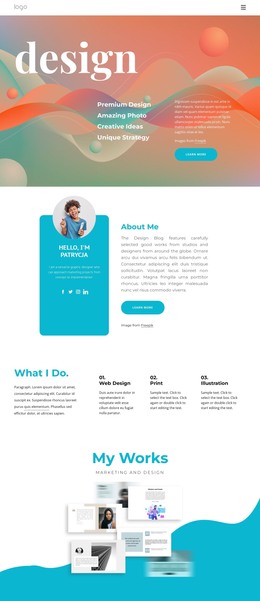
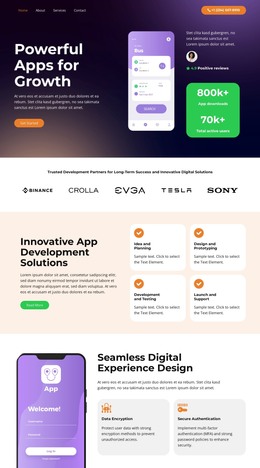
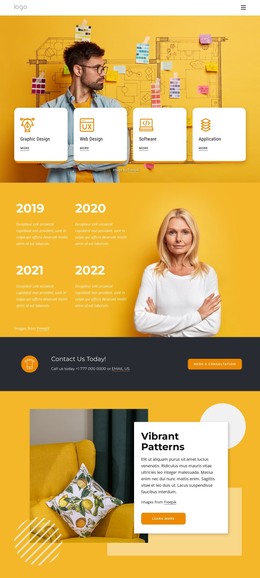
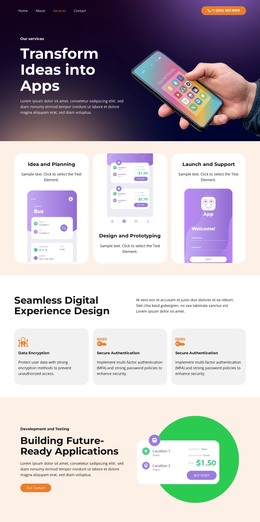
Creative, immersive and breathtaking design HTML Template
Edit Template Offline
2. Create new page and search for id 5864845
Edit Template Online
Create Awesome Websites


Free Nicepage Builder
Keywords
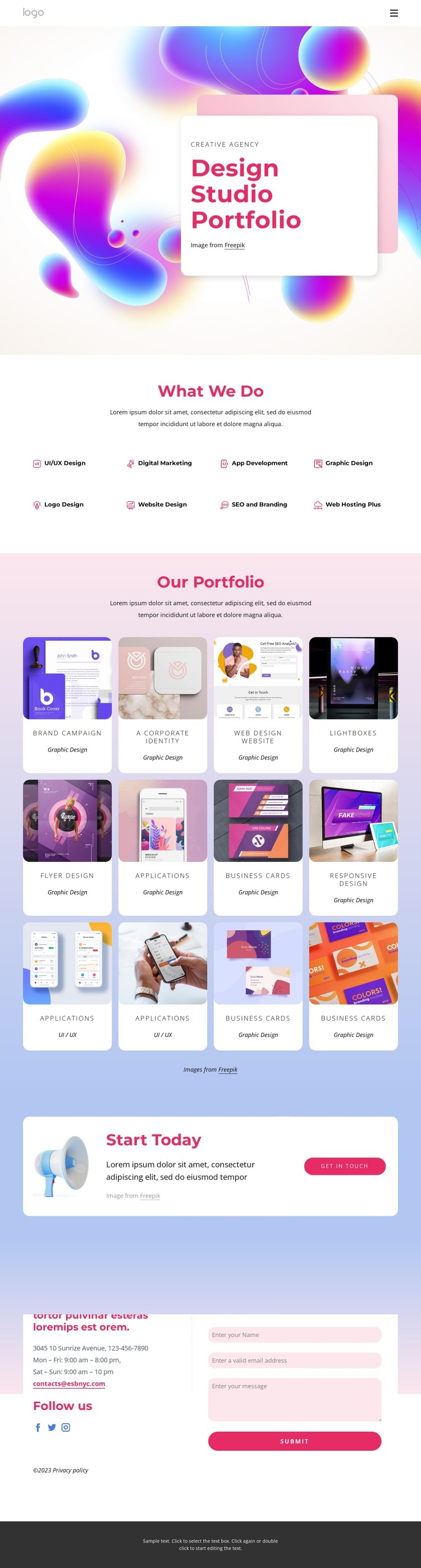
Twelve Project Cards Complete the Static Portfolio Presentation
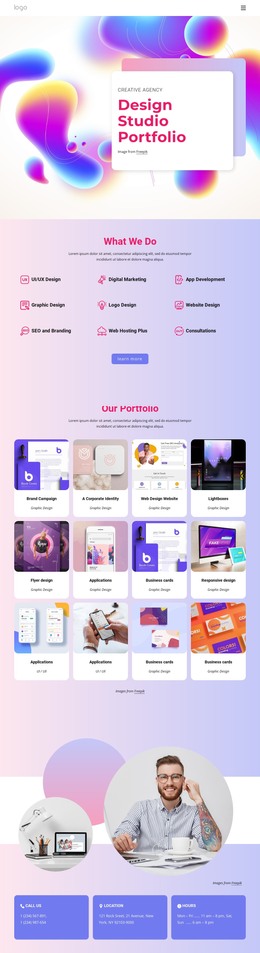
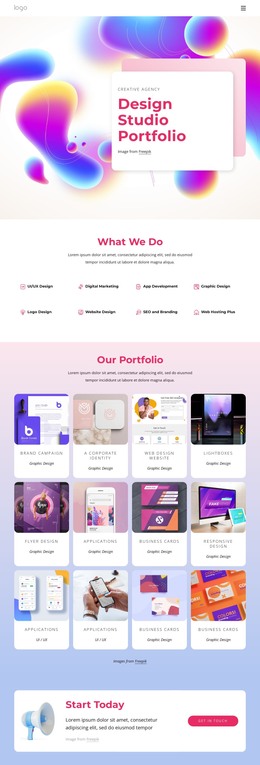
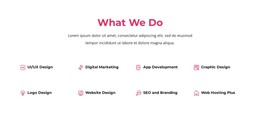
The page already contains the principal content areas needed for a self-contained creative studio presentation. The abstract hero introduces the Design Studio Portfolio subject with a strong visual statement, while the white rounded card gives the opening message a distinct reading surface. Visitors can then move into the What We Do section, where eight service categories explain the range of work without requiring separate introductory pages for each offering.
The twelve image-based portfolio entries provide the page’s main evidence of creative work. Because each project card combines imagery with a title and category, the collection can function as a finished showcase rather than only a decorative gallery. Its multi-row arrangement adds depth to the static page while keeping the work grouped under a clear Our Portfolio heading. The sequence from services to selected projects creates a practical relationship between what the studio offers and how that work is presented.
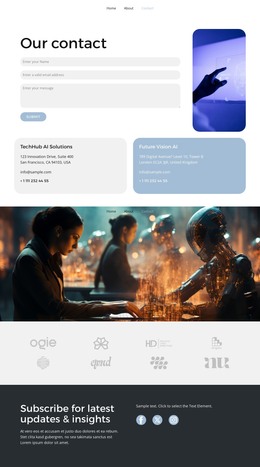
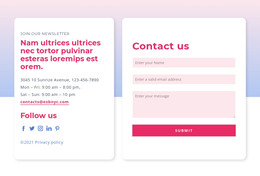
The later sections complete the page’s communication path. Start Today introduces a separate Get in Touch button, and the contact area adds newsletter content, Facebook, Twitter, and Instagram links, plus a form with name, email, and message inputs. These elements give the static implementation a clear closing interaction instead of ending after the portfolio grid. The dark footer then provides a compact visual boundary. As a result, the design offers a finished HTML page structure with introduction, service coverage, project proof, action content, contact capture, and footer information already arranged.
Customize with Nicepage
Open this ready-made template in the HTML Builder and customize it visually in the Nicepage editor. Replace demo content, edit page sections, and adapt the design to your project without rebuilding the template from scratch.
Export and Use This Template as an HTML Website
Create a Portable HTML Website
When the template is ready, use the HTML Export option to create a static website with the files required for deployment. The exported website can be used independently of the Nicepage editor and deployed on your preferred hosting.
Nicepage also provides SEO settings and optimization features, including Page Titles and Descriptions, Canonical settings, headings, image Alt Text, and other page-level properties that help prepare the website for search engines.
Deploy Without a CMS
Upload the finished website to the hosting environment that fits your project. Because the exported site does not require WordPress, Joomla, or another CMS to deliver its pages, it can be placed on your own server, uploaded to a hosting provider, or deployed through an existing web infrastructure.
Hand Off the Website Files
The generated website files can also be provided to a client, developer, or hosting team. They remain available outside the Nicepage editor for deployment, technical review, or project-specific development when additional work is required.
This workflow makes the template a practical foundation for a portable static website that can be exported from the Nicepage editor and deployed independently.

Design Set (16)
-

-
-
-
-
-
-
Free Website Builder SoftwareDownload
-
-
-
-
-
-








More from Art & Design HTML Templates
-
-
Free Website Builder SoftwareDownload