100 weekly in-studio classes HTML Template



Edit Template Offline
2. Create new page and search for id 4795503
Edit Template Online
Create Awesome Websites


Free Nicepage Builder
Keywords
Yoga Classes, Events, Retreats, and Videos in One Static Page
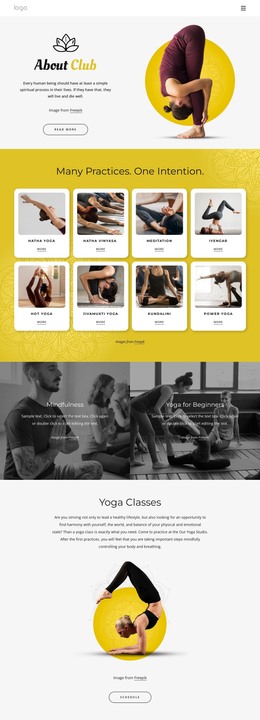
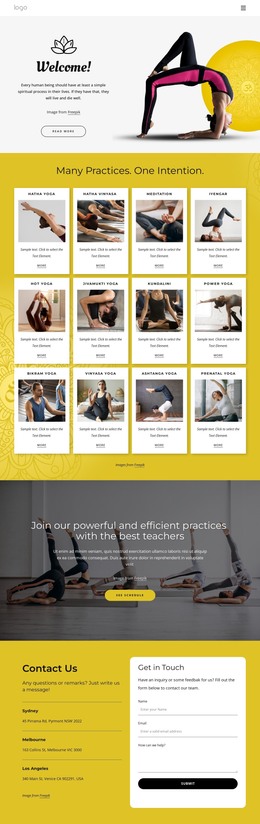
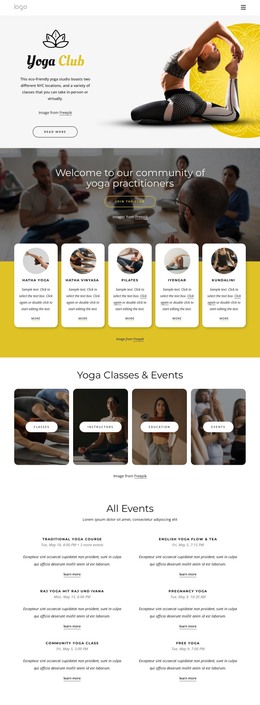
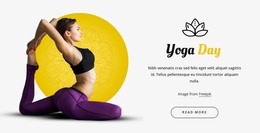
The opening Yoga Club section gives the page a clear introduction, combining studio copy, a large yoga photograph, and a Read more action. From there, the community section expands the subject through five yoga style cards: Hatha Yoga, Hatha Vinyasa, Pilates, Iyengar, and Kundalini. This creates a ready-made content arrangement for presenting different practices without requiring the main categories to be built from scratch.
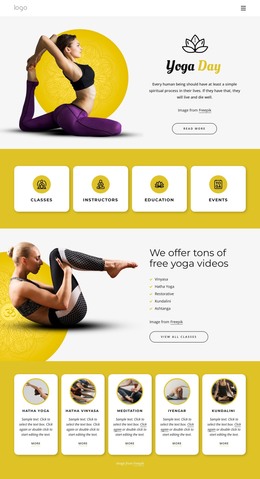
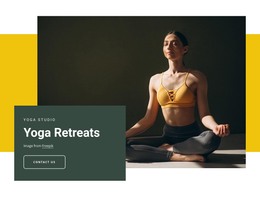
The following classes and events gallery adds four recognizable content paths—Classes, Instructors, Education, and Events—before the All Events area presents six event entries with dates, descriptions, and learn-more actions. A membership call to action then provides a distinct participation point, while the Yoga for Flexible Mind and Body, Yoga Retreats, and free video sections broaden the page beyond a simple class listing. The design therefore works as a complete static HTML presentation for a studio that needs informational, promotional, and educational content together.
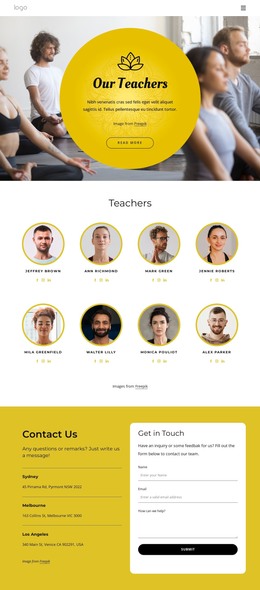
The closing contact area supports the page’s practical purpose by pairing three location entries with a contact form. Because the page already connects introduction, class discovery, event information, retreat promotion, video resources, and inquiries, it can function as a self-contained static website page rather than only a visual starting concept.
Customize with Nicepage
Open this ready-made template in the HTML Builder and customize it visually in the Nicepage editor. Replace demo content, edit page sections, and adapt the design to your project without rebuilding the template from scratch.
Export and Use This Template as an HTML Website
Create a Portable HTML Website
When the template is ready, use the HTML Export option to create a static website with the files required for deployment. The exported website can be used independently of the Nicepage editor and deployed on your preferred hosting.
Nicepage also provides SEO settings and optimization features, including Page Titles and Descriptions, Canonical settings, headings, image Alt Text, and other page-level properties that help prepare the website for search engines.
Deploy Without a CMS
Upload the finished website to the hosting environment that fits your project. Because the exported site does not require WordPress, Joomla, or another CMS to deliver its pages, it can be placed on your own server, uploaded to a hosting provider, or deployed through an existing web infrastructure.
Hand Off the Website Files
The generated website files can also be provided to a client, developer, or hosting team. They remain available outside the Nicepage editor for deployment, technical review, or project-specific development when additional work is required.
This workflow makes the template a practical foundation for a portable static website that can be exported from the Nicepage editor and deployed independently.

Design Set (16)
-

-
-
-
-
-
Free Website Builder SoftwareDownload
-
-
-
-
-
-




More from Sports HTML Templates
-
Free Website Builder SoftwareDownload