Next level analytics HTML Template


Six Profile Cards Form a Ready-Made Static Section
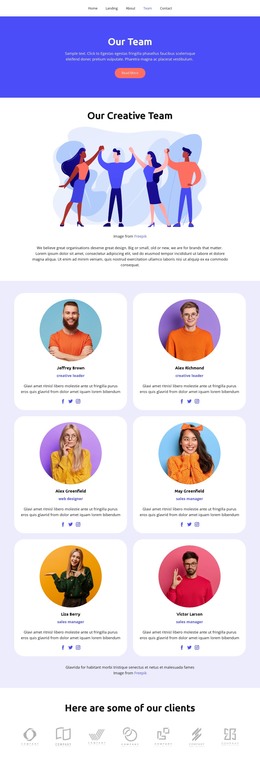
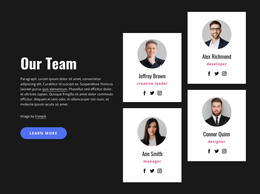
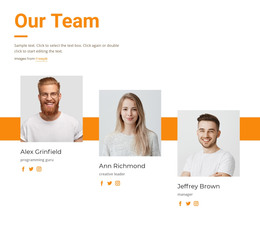
The centered “2023 team” heading establishes the subject before the six profile cards begin. Arranged in three rows of two, the cards create a compact team presentation that can sit inside a static HTML page without requiring the surrounding page to carry the section’s core content. The repeated structure also keeps each profile visually comparable: a name identifies the item, a circular portrait supplies the personal focus, and the social-link row provides the same outbound-link pattern across the group.
Rounded white containers stand out against the light gray section background, giving the six profiles clear boundaries while preserving the centered, evenly spaced composition. Coral is reserved for the year and social icons, so the accent connects the heading with the repeated card details rather than introducing a separate visual system. The attribution line remains a small supporting element above the grid, while the cards carry the main information.
Used as an HTML Template section, this arrangement is suited to a static page that needs a finished team area between other content sections. The containing page can supply navigation, introductions, contact content, and footer material, while this block preserves its focused people-profile role. Its consistent card pattern also makes the section practical to adapt with replacement profile content without changing the underlying arrangement. The social links remain external destinations, matching the confirmed interaction model of the block.
Customize with Nicepage
Open this ready-made template in the HTML Builder and customize it visually in the Nicepage editor. Replace demo content, edit page sections, and adapt the design to your project without rebuilding the template from scratch.
Edit Template Offline
2. Create a new page or select existing
3. Click Add new block, search for id 4532990 and click enter
Edit Template Online
Create Awesome Websites


Free Nicepage Builder
Keywords
Use This Block in a Static HTML Page
Start With a Ready-Made Section
A block provides one prepared content area that can be combined with other sections to build a static HTML page. Customize its text, images, spacing, colors, and other elements in the Nicepage editor while keeping the block focused on its own purpose, such as services, testimonials, pricing, contact information, or visual presentation.
Export the Containing HTML Project
When the page or website that contains the block is ready, use HTML Export to create the files required for a static HTML project. The export applies to the containing page/site rather than turning one individual block into a complete website by itself.
Reuse the Section Within the Project
The same block design can be adapted as one content section within a larger static site. Other Blocks can provide navigation, introductions, portfolios, forms, footers, and additional page content while this section keeps its own verified content and layout role.
This workflow makes the block useful as a ready-made section inside a static HTML implementation, with export and deployment handled at the page or website level.