900 residental projects HTML Template


Eight named cards form a ready-made static portfolio section
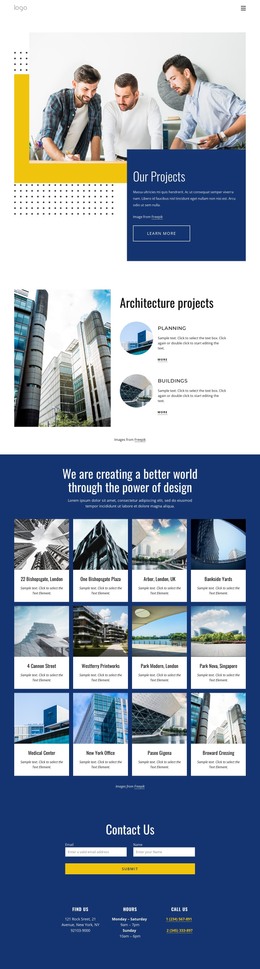
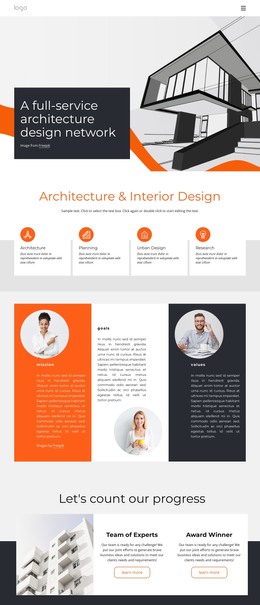
The heading and supporting paragraph establish the section’s subject before the gallery begins, so the block can carry a complete portfolio message within its own content area. Beneath that introduction, eight image cards present residential architecture projects in a four-column grid with two rows. Each card combines one architectural scene with one project name, creating a self-contained browsing unit that can be placed inside a static HTML page while surrounding sections handle other page functions.
The visual arrangement is equally deliberate. A dark blue section background frames the gallery, white labels provide contrast below the images, and the consistent crops make different building scenes comparable within the same repeated pattern. Rounded upper-left corners add a shared visual detail to the cards, while generous spacing keeps the grid from competing with the centered introduction. These relationships are already sufficient for the block’s portfolio role without adding page-level navigation or other site structure.
In a static HTML context, this block works as one prepared section rather than a complete website. It can sit between other content areas, carrying the residential project overview through its eight named entries. The surrounding page can provide introductions, project details, contact content, or footer material while this section retains its own dark, image-led gallery arrangement.
Customize with Nicepage
Open this ready-made template in the HTML Builder and customize it visually in the Nicepage editor. Replace demo content, edit page sections, and adapt the design to your project without rebuilding the template from scratch.
Edit Template Offline
2. Create a new page or select existing
3. Click Add new block, search for id 4455249 and click enter
Edit Template Online
Create Awesome Websites


Free Nicepage Builder
Keywords
Use This Block in a Static HTML Page
Start With a Ready-Made Section
A block provides one prepared content area that can be combined with other sections to build a static HTML page. Customize its text, images, spacing, colors, and other elements in the Nicepage editor while keeping the block focused on its own purpose, such as services, testimonials, pricing, contact information, or visual presentation.
Export the Containing HTML Project
When the page or website that contains the block is ready, use HTML Export to create the files required for a static HTML project. The export applies to the containing page/site rather than turning one individual block into a complete website by itself.
Reuse the Section Within the Project
The same block design can be adapted as one content section within a larger static site. Other Blocks can provide navigation, introductions, portfolios, forms, footers, and additional page content while this section keeps its own verified content and layout role.
This workflow makes the block useful as a ready-made section inside a static HTML implementation, with export and deployment handled at the page or website level.