Contact us with map Html Code Example


The Form and Map Create Clear Extension Zones
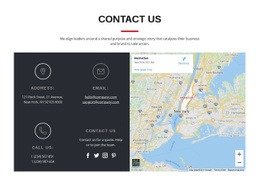
The left form already establishes the section's main inquiry path through name, email, message, terms acceptance, and submission. The centered dark column adds phone, location, and three service labels, while the map on the right supplies geographic context. These distinct regions create logical boundaries for a project-specific extension: an additional data element could sit near the form, a service-related component could relate to the central group, or an external location enhancement could accompany the map.
The existing block should remain the visual and content base when custom HTML is considered. An external widget could be placed beside the relevant region only if the project needs functionality beyond the visible contact arrangement. For example, a booking or availability element might relate to the inquiry area, while a specialized mapping component could build on the right-side location panel. The three-column composition helps keep such additions associated with the right content purpose instead of scattering them across the section. Nicepage's HTML Element supports custom HTML, CSS, and JavaScript, but that capability describes a possible extension path rather than content already present in this block. The original form, service groups, and marker-led map remain the section's organizing structure.
Customize with Nicepage
Open this ready-made template in the HTML Code Generator and customize it visually in the Nicepage editor. Replace demo content, edit page sections, and adapt the design to your project without rebuilding the template from scratch.
Edit Template Offline
2. Create a new page or select existing
3. Click Add new block, search for id 812603 and click enter
Edit Template Online
Create Awesome Websites


Free Nicepage Builder
Keywords
Extend This Page With Custom HTML Code
Insert Code With the HTML Element
Use the HTML Element to add custom code directly to a Block in the Nicepage editor. Enter the required markup in the Code field when the page needs content or functionality that is not available through the standard page elements.
Place the HTML Element in the Layout
Treat the HTML Element as part of the visual page composition. Adjust its position, width, height, alignment, and margins to place the custom content where it belongs alongside text, images, buttons, and other elements. This makes it possible to combine visually edited sections with project-specific code without separating the custom element from the rest of the layout.
Add HTML, CSS, JavaScript, and External Components
The HTML Element supports HTML, CSS, and JavaScript, allowing you to extend the page with custom markup and interactive functionality. It can also be used to embed custom code and third-party components, such as social feeds, advertising code, widgets, or other external functionality required by the project.
This workflow makes the template useful for projects that need a visual page editor together with custom HTML code, JavaScript, embedded components, and functionality beyond the standard page elements.