Healthy way of eating food Html Code Example


Edit Template Offline
2. Create new page and search for id 78417
Edit Template Online
Create Awesome Websites


Free Nicepage Builder
Keywords
Recipe Categories and Menu Areas Provide Clear Extension Points
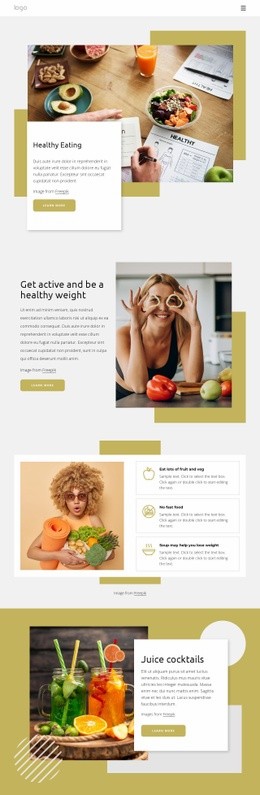
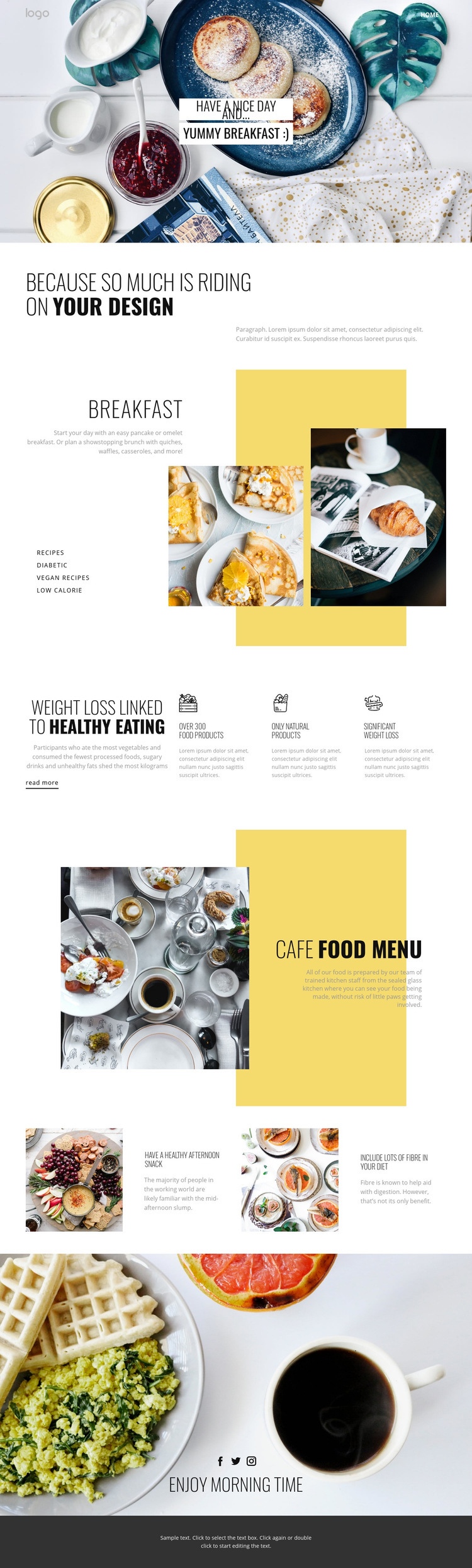
The breakfast category section and cafe food menu create distinct content zones that can remain visually independent if the project needs additional functionality. Recipes, diabetic, vegan recipes, and low-calorie links already divide the food subject into recognizable paths. A custom element could therefore be placed beside those categories when the final project requires an external recipe directory, filtering control, or another specialized content service. Such an addition would extend the page’s behavior without changing the yellow-framed arrangement or the two food images that establish the section.
The cafe food menu offers a second, different integration point. Its large photograph and yellow-backed text panel make the menu a prominent presentation area, but the verified analysis does not show an ordering system or embedded application already present. If online ordering, reservation handling, or a third-party menu component becomes necessary, that functionality could be introduced in relation to this section rather than assumed to be part of the template. The healthy-eating feature row and the two tip blocks provide further content boundaries for related external material, although they should not be treated as existing interactive modules.
The HTML structure also contains a logo area and Home navigation, giving custom markup a defined place near shared page content. Any extension should preserve the sequence from breakfast introduction to categories, menu, tips, and social closing message so added functionality supports the existing presentation instead of flattening it into an unrelated application.
Customize with Nicepage
Open this ready-made template in the HTML Code Generator and customize it visually in the Nicepage editor. Replace demo content, edit page sections, and adapt the design to your project without rebuilding the template from scratch.
Extend This Page With Custom HTML Code
Insert Code With the HTML Element
Use the HTML Element to add custom code directly to a Block in the Nicepage editor. Enter the required markup in the Code field when the page needs content or functionality that is not available through the standard page elements.
Place the HTML Element in the Layout
Treat the HTML Element as part of the visual page composition. Adjust its position, width, height, alignment, and margins to place the custom content where it belongs alongside text, images, buttons, and other elements. This makes it possible to combine visually edited sections with project-specific code without separating the custom element from the rest of the layout.
Add HTML, CSS, JavaScript, and External Components
The HTML Element supports HTML, CSS, and JavaScript, allowing you to extend the page with custom markup and interactive functionality. It can also be used to embed custom code and third-party components, such as social feeds, advertising code, widgets, or other external functionality required by the project.
This workflow makes the template useful for projects that need a visual page editor together with custom HTML code, JavaScript, embedded components, and functionality beyond the standard page elements.

More from Food & Restaurant Html Code Examples
-
Customize Any TemplateDownload