Traveling around the world Html Code Example


The Coastal Image Creates a Defined Extension Area
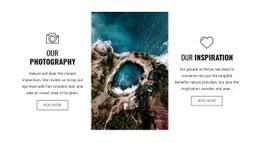
The aerial photograph already carries the block’s main visual message: dense forest meets a rocky shoreline, surf, and turquoise ocean in one continuous landscape. The white “around the World” heading is positioned near the upper-left, so the text and image establish a clear introduction without requiring extra content inside the section.
That separation can also guide optional custom HTML work. If a project needs an additional data display, embedded media control, or other external component, the existing heading and landscape provide reference points for deciding where the extension belongs. A custom element could be considered near the text region or in an adjacent area of the section, provided it does not obscure the white type or compete with the strongest part of the photograph. The block’s static behavior means there is no confirmed built-in interaction to preserve or replace.
In an HTML Code context, the useful starting point is therefore not an assumption about existing scripts. It is the block’s bounded combination of one heading and one full-width image. Any added functionality can be evaluated against that established hierarchy, while the coastal scene remains the visual anchor. This keeps optional code connected to the introduction’s purpose rather than turning a focused hero section into an unrelated technical area.
Customize with Nicepage
Open this ready-made template in the HTML Code Generator and customize it visually in the Nicepage editor. Replace demo content, edit page sections, and adapt the design to your project without rebuilding the template from scratch.
Edit Template Offline
2. Create a new page or select existing
3. Click Add new block, search for id 51797 and click enter
Edit Template Online
Create Awesome Websites


Free Nicepage Builder
Keywords
Extend This Block With Custom HTML Code
Add Custom Code Inside or Beside the Section
Use the HTML Element when the block needs project-specific content or functionality that is not provided by its existing elements. The custom element can be placed within the section or near a relevant content region so the added functionality remains connected to the block's purpose.
Position the HTML Element in the Layout
Treat the HTML Element as part of the visual composition. Adjust its position, width, height, alignment, and margins so the custom content fits alongside the block's text, images, buttons, cards, or other elements instead of behaving like a separate page.
Add HTML, CSS, JavaScript, or External Components
The HTML Element supports HTML, CSS, and JavaScript and can be used for custom code and third-party components, including widgets, feeds, advertising code, or other integrations required by a project. Use these capabilities only when the section needs functionality beyond its verified built-in content.
This workflow keeps the original block as the visual/content base while providing a controlled way to extend one section without turning custom code into the primary structure of the whole page.