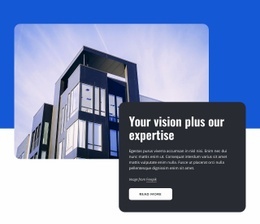
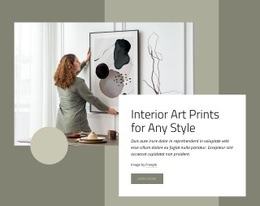
Projects include apartments and houses Html Code Example


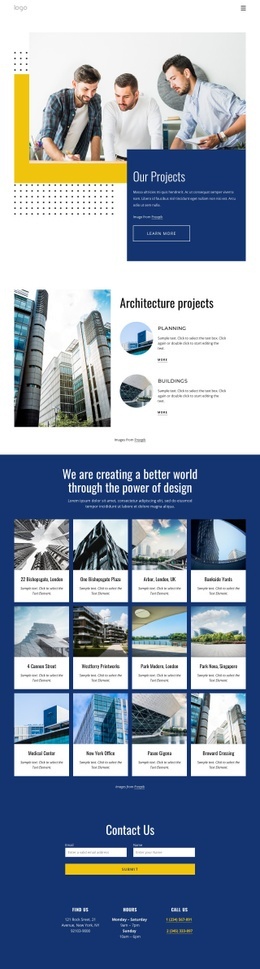
The Project Image and Overlapping Panel Leave Room for Section-Level Extensions
The large collaborative-work photograph already establishes the block’s subject, while the overlapping navy panel provides a defined region for the “Our Projects” heading, supporting paragraph, and “Learn more” action. Because these areas are visually separated, a project may add custom functionality near the relevant content without disturbing the main portfolio composition. For example, an external project viewer, inquiry widget, or data element could be positioned beside or within the information panel when the surrounding website requires more than the existing static content.
The yellow geometric framing and dotted details also give an extension a clear visual context. Any added element would need to respect the strong contrast between the navy panel, white heading, light body text, and pale blue-gray background. Custom markup is therefore best treated as a targeted addition to this section rather than a replacement for its image, paragraph, or “Learn more” action. The block can remain the visual and editorial base while a project-specific integration supplies additional portfolio information or a response path. Its layered structure makes the boundary between existing content and optional functionality easy to understand.
Customize with Nicepage
Open this ready-made template in the HTML Code Generator and customize it visually in the Nicepage editor. Replace demo content, edit page sections, and adapt the design to your project without rebuilding the template from scratch.
Edit Template Offline
2. Create a new page or select existing
3. Click Add new block, search for id 4626284 and click enter
Edit Template Online
Create Awesome Websites


Free Nicepage Builder
Keywords
Extend This Page With Custom HTML Code
Insert Code With the HTML Element
Use the HTML Element to add custom code directly to a Block in the Nicepage editor. Enter the required markup in the Code field when the page needs content or functionality that is not available through the standard page elements.
Place the HTML Element in the Layout
Treat the HTML Element as part of the visual page composition. Adjust its position, width, height, alignment, and margins to place the custom content where it belongs alongside text, images, buttons, and other elements. This makes it possible to combine visually edited sections with project-specific code without separating the custom element from the rest of the layout.
Add HTML, CSS, JavaScript, and External Components
The HTML Element supports HTML, CSS, and JavaScript, allowing you to extend the page with custom markup and interactive functionality. It can also be used to embed custom code and third-party components, such as social feeds, advertising code, widgets, or other external functionality required by the project.
This workflow makes the template useful for projects that need a visual page editor together with custom HTML code, JavaScript, embedded components, and functionality beyond the standard page elements.

Design Set (20)















More from Architecture & Building Blocks
-
-

-
-
-
-
-
-
-
-
-
Customize Any TemplateDownload
-
-
-
-
-
-
-
-
-
-









More from Group Blocks
-

-
-
-
-
-
-
-
-
-
-
Customize Any TemplateDownload
-
-
-
-
-
-
-
-
-
-