Island Travel Html Code Example


Edit Template Offline
2. Create new page and search for id 20994
Edit Template Online
Create Awesome Websites


Free Nicepage Builder
Keywords
Travel Offers and Gallery Zones Ready for Extension
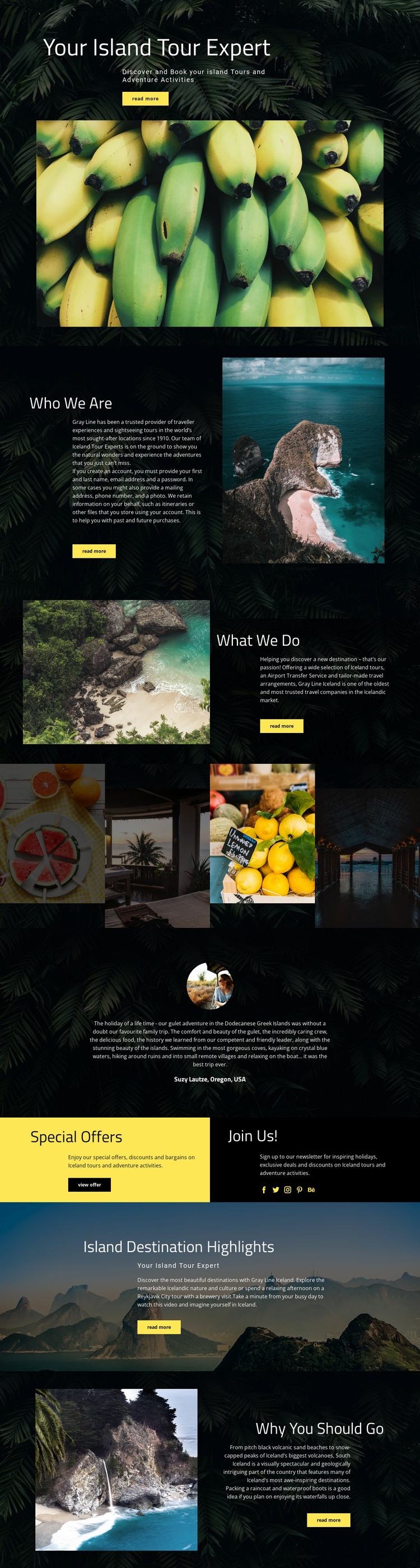
The hero’s “Your Island Tour Expert” message and large destination photograph establish the main subject before the page moves into “Who We Are” and “What We Do.” Those service areas identify Iceland tours, airport transfer services, tailor-made arrangements, and adventure activities as distinct content zones. A custom element could therefore be placed beside an existing service or offer area when the project needs functionality that standard text, buttons, and images do not provide, without changing the page’s established travel narrative.
The four-image destination showcase provides another clear integration point. It is visually separate from the explanatory sections, so an external gallery enhancement, itinerary widget, booking component, or destination data block could be introduced there while preserving the surrounding image-led composition. The testimonial section offers a different kind of extension zone: it could accommodate a project-specific review feed or external trust component, provided the added functionality remains consistent with the existing centered presentation.
Near the end, “Special Offers” combines an offer panel with newsletter promotion and social links, giving custom functionality a practical context around promotional content. The existing “View offer” and “Read more” actions already define where additional behavior might support the visitor journey. Nicepage’s HTML Element can provide a route for such targeted additions, but the template itself should be treated as the visual and content foundation rather than as evidence that custom code is already included.
Customize with Nicepage
Open this ready-made template in the HTML Code Generator and customize it visually in the Nicepage editor. Replace demo content, edit page sections, and adapt the design to your project without rebuilding the template from scratch.
Extend This Page With Custom HTML Code
Insert Code With the HTML Element
Use the HTML Element to add custom code directly to a Block in the Nicepage editor. Enter the required markup in the Code field when the page needs content or functionality that is not available through the standard page elements.
Place the HTML Element in the Layout
Treat the HTML Element as part of the visual page composition. Adjust its position, width, height, alignment, and margins to place the custom content where it belongs alongside text, images, buttons, and other elements. This makes it possible to combine visually edited sections with project-specific code without separating the custom element from the rest of the layout.
Add HTML, CSS, JavaScript, and External Components
The HTML Element supports HTML, CSS, and JavaScript, allowing you to extend the page with custom markup and interactive functionality. It can also be used to embed custom code and third-party components, such as social feeds, advertising code, widgets, or other external functionality required by the project.
This workflow makes the template useful for projects that need a visual page editor together with custom HTML code, JavaScript, embedded components, and functionality beyond the standard page elements.

More from Travel & Hotels Html Code Examples
-
Customize Any TemplateDownload