Nike Favorites Html Code Example


Edit Template Offline
2. Create new page and search for id 17179
Edit Template Online
Create Awesome Websites


Free Nicepage Builder
Keywords
Product Showcases That Leave Clear Extension Points
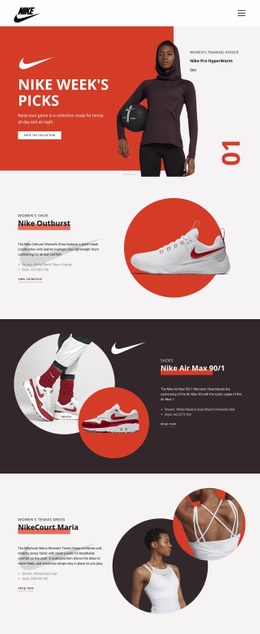
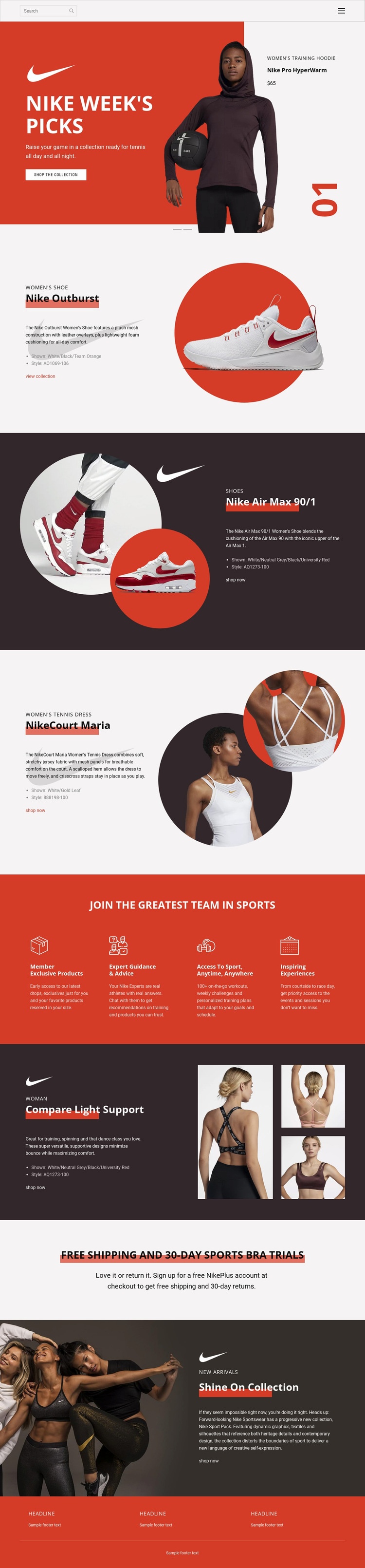
The promotional hero and product feature sections create practical zones for project-specific extensions. The two-slide Nike Week’s Picks carousel already separates campaign messaging, product details, imagery, and a shopping action, so additional markup could be placed around those roles without changing the visual logic. The same applies to the split presentations for Nike Outburst, Nike Air Max 90/1, NikeCourt Maria, and Compare Light Support, where text and product imagery occupy clearly defined neighboring areas.
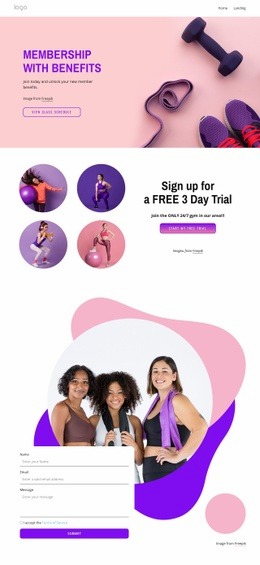
The four membership benefit columns provide another distinct content pattern. Each item has a repeated icon-and-copy relationship, which could accommodate an external membership explanation, eligibility component, or related service element if the final project required functionality beyond the visible content. The shipping and sports bra trial promotion is a compact standalone area that could also host a project-specific notice or response element while remaining separate from the product stories.
These zones are useful because custom functionality can be added beside an established retail narrative rather than forcing a complete redesign. Nicepage’s HTML Element supports adding external code when a project needs an integration that the standard page elements do not provide. The existing navigation, carousel, product splits, benefit group, and closing collection section give that code a logical visual context without claiming that custom code is already present in the template.
Customize with Nicepage
Open this ready-made template in the HTML Code Generator and customize it visually in the Nicepage editor. Replace demo content, edit page sections, and adapt the design to your project without rebuilding the template from scratch.
Extend This Page With Custom HTML Code
Insert Code With the HTML Element
Use the HTML Element to add custom code directly to a Block in the Nicepage editor. Enter the required markup in the Code field when the page needs content or functionality that is not available through the standard page elements.
Place the HTML Element in the Layout
Treat the HTML Element as part of the visual page composition. Adjust its position, width, height, alignment, and margins to place the custom content where it belongs alongside text, images, buttons, and other elements. This makes it possible to combine visually edited sections with project-specific code without separating the custom element from the rest of the layout.
Add HTML, CSS, JavaScript, and External Components
The HTML Element supports HTML, CSS, and JavaScript, allowing you to extend the page with custom markup and interactive functionality. It can also be used to embed custom code and third-party components, such as social feeds, advertising code, widgets, or other external functionality required by the project.
This workflow makes the template useful for projects that need a visual page editor together with custom HTML code, JavaScript, embedded components, and functionality beyond the standard page elements.

More from Sports Html Code Examples
-
Customize Any TemplateDownload