Surfing Html Code Example


Edit Template Offline
2. Create new page and search for id 16800
Edit Template Online
Create Awesome Websites


Free Nicepage Builder
Keywords
Lesson Offers and Contact Information Create Clear Extension Points
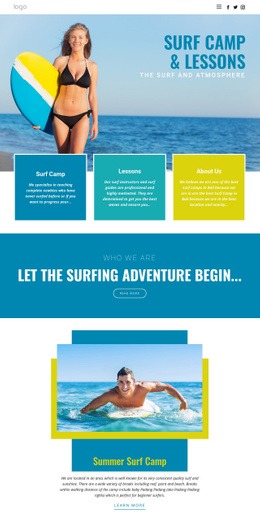
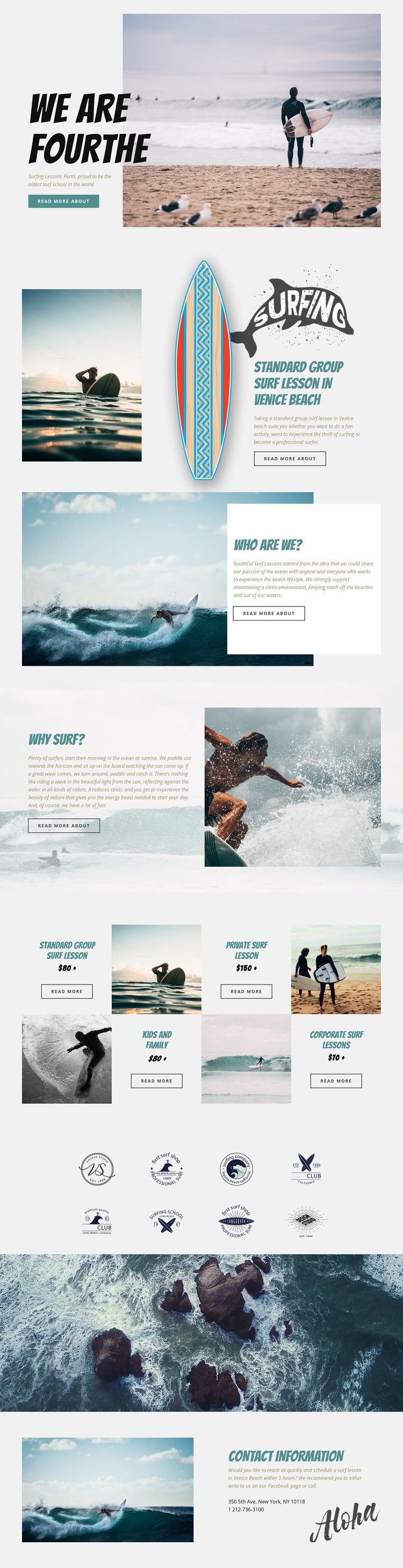
The featured group lesson section, the four offering tiles, and the closing contact area divide the page into practical zones where project-specific functionality could be added without disturbing the main presentation. The lesson grid already separates standard group, private, kids and family, and corporate surf lessons, so an external booking, availability, or pricing component could be associated with the relevant offer rather than placed arbitrarily in the introduction.
The contact section provides a second natural integration point. It contains scheduling-oriented instructions, a Venice Beach reference, location text, and displayed telephone information, making it the logical place for an inquiry tool or another contact-related component if the final project requires more than the existing content. The Read more actions throughout the page also identify places where additional destinations or interactive behavior could be connected.
The eight-logo brand display and the image-led lesson sections should remain visually coordinated with any added functionality. Custom markup or an external widget could sit beside the established content, while the existing collage-like arrangement continues to provide the page’s visual context. This approach treats custom HTML as an extension of real template zones: the code would support booking, availability, or another project requirement only if needed, without claiming that such custom functionality is already present in the design.
Customize with Nicepage
Open this ready-made template in the HTML Code Generator and customize it visually in the Nicepage editor. Replace demo content, edit page sections, and adapt the design to your project without rebuilding the template from scratch.
Extend This Page With Custom HTML Code
Insert Code With the HTML Element
Use the HTML Element to add custom code directly to a Block in the Nicepage editor. Enter the required markup in the Code field when the page needs content or functionality that is not available through the standard page elements.
Place the HTML Element in the Layout
Treat the HTML Element as part of the visual page composition. Adjust its position, width, height, alignment, and margins to place the custom content where it belongs alongside text, images, buttons, and other elements. This makes it possible to combine visually edited sections with project-specific code without separating the custom element from the rest of the layout.
Add HTML, CSS, JavaScript, and External Components
The HTML Element supports HTML, CSS, and JavaScript, allowing you to extend the page with custom markup and interactive functionality. It can also be used to embed custom code and third-party components, such as social feeds, advertising code, widgets, or other external functionality required by the project.
This workflow makes the template useful for projects that need a visual page editor together with custom HTML code, JavaScript, embedded components, and functionality beyond the standard page elements.

More from Sports Html Code Examples
-
Customize Any TemplateDownload