Cafe food menu HTML5 Template


One Menu Introduction Group With Separate Image and Text Regions
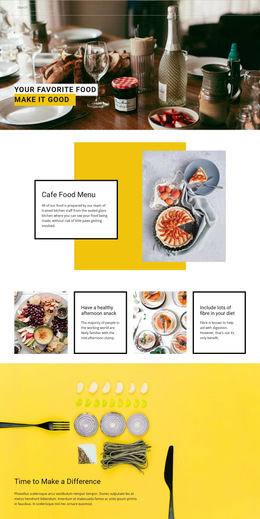
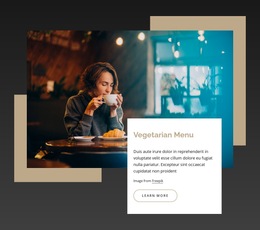
The block is organized around one image-led menu introduction rather than several repeated content groups. The left region contains a single food photograph, and the right region contains the “Cafe Food Menu” heading followed by one supporting paragraph. This establishes a straightforward internal hierarchy: the image provides the visual subject, the heading names the content area, and the paragraph adds information about food preparation by trained kitchen staff.
Behind these content elements, the dark green base and coral vertical panel form layered background regions. The square photograph overlaps the colored panel, linking the visual region to the content area instead of placing the image in an unrelated column. The right-aligned text creates a second internal anchor, so the block reads as a coordinated split composition even though its interaction is static.
As an HTML5 Template interpretation, the important point is the organization inside this section: one heading group, one paragraph, one image, and supporting background shapes arranged in a two-column relationship. That internal hierarchy can be inspected and adapted without assuming a full-page structure. The block remains a reusable content unit whose elements work together to introduce the cafe food menu.
Customize with Nicepage
Open this ready-made template in the HTML5 Template Builder and customize it visually in the Nicepage editor. Replace demo content, edit page sections, and adapt the design to your project without rebuilding the template from scratch.
Edit Template Offline
2. Create a new page or select existing
3. Click Add new block, search for id 69247 and click enter
Edit Template Online
Create Awesome Websites


Free Nicepage Builder
Keywords
Explore the Structure of This HTML5 Block
Inspect the Block Hierarchy
Use the Layers panel to inspect the hierarchy of the block, including its Containers, Elements, repeated content groups, and nested items. For a reusable section, the useful structural question is how the content inside the block is organized, not how an entire website is arranged from Header to Footer.
Work With Organized Content Groups
A block can combine headings, text, images, buttons, grids, lists, forms, or other elements inside one structured section. Keeping those relationships visible makes it easier to select, rename, hide, lock, or reorganize parts of a more complex layout without losing the intended content hierarchy.
Extend the Structure Carefully
If a project later needs an extra content element or custom integration, the internal hierarchy can be inspected before changes are made. This helps preserve the relationship between the block's existing elements while the section is adapted to the needs of the containing page.
This workflow treats the design as an HTML5-oriented section with a clear internal organization, while page-level navigation, Header, Footer, and other site structure remain outside the block unless they are explicitly part of the section itself.