Craft Coffee HTML5 Template


The image region, decorative forms, and card create a readable hierarchy
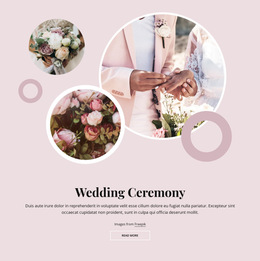
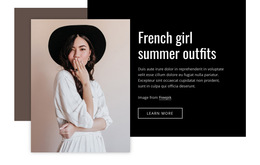
The internal organization begins with a large circular portrait on the left, where the image treatment carries the first visual emphasis. Several lavender and purple circles and ring-like forms surround that portrait, functioning as a decorative layer within the same image-led region. The overlapping dark brown card forms a second major group on the right. Inside it, the bold white heading “What Is Craft Coffee?” introduces the subject, the compact white paragraph provides explanation, and the “Read more” action follows that explanation. The image credit is included with the card content, preserving attribution within the section’s information group.
This hierarchy matters because the block is not a flat collection of unrelated elements. The portrait establishes visual context, the decorative shapes frame it, and the card gathers the written material into one bounded container. The heading therefore leads into the paragraph before the action, while the card’s overlap ties the explanatory content back to the image. As an HTML5-oriented section, this existing grouping can be reviewed and maintained as related containers and elements inside one block. The structure supports future content adjustments without requiring the section to be reorganized into a page-wide hierarchy. Header, footer, and surrounding navigation remain outside this internal arrangement.
Customize with Nicepage
Open this ready-made template in the HTML5 Template Builder and customize it visually in the Nicepage editor. Replace demo content, edit page sections, and adapt the design to your project without rebuilding the template from scratch.
Edit Template Offline
2. Create a new page or select existing
3. Click Add new block, search for id 222065 and click enter
Edit Template Online
Create Awesome Websites


Free Nicepage Builder
Keywords
Explore the Structure of This HTML5 Block
Inspect the Block Hierarchy
Use the Layers panel to inspect the hierarchy of the block, including its Containers, Elements, repeated content groups, and nested items. For a reusable section, the useful structural question is how the content inside the block is organized, not how an entire website is arranged from Header to Footer.
Work With Organized Content Groups
A block can combine headings, text, images, buttons, grids, lists, forms, or other elements inside one structured section. Keeping those relationships visible makes it easier to select, rename, hide, lock, or reorganize parts of a more complex layout without losing the intended content hierarchy.
Extend the Structure Carefully
If a project later needs an extra content element or custom integration, the internal hierarchy can be inspected before changes are made. This helps preserve the relationship between the block's existing elements while the section is adapted to the needs of the containing page.
This workflow treats the design as an HTML5-oriented section with a clear internal organization, while page-level navigation, Header, Footer, and other site structure remain outside the block unless they are explicitly part of the section itself.