The Best Steakhouse Web Page Design

Edit Template Offline
2. Create new page and search for id 3814299
Edit Template Online
Create Awesome Websites


Free Nicepage Builder
Keywords
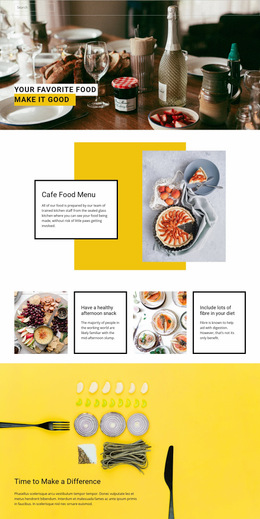
Image-Led Sections Shift the Page from Atmosphere to Practical Detail
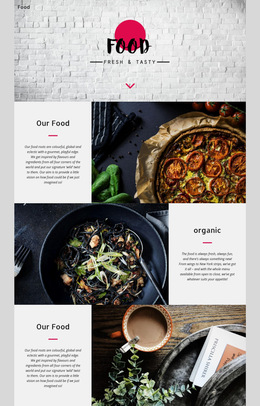
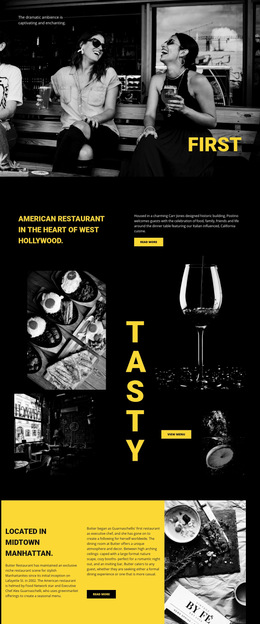
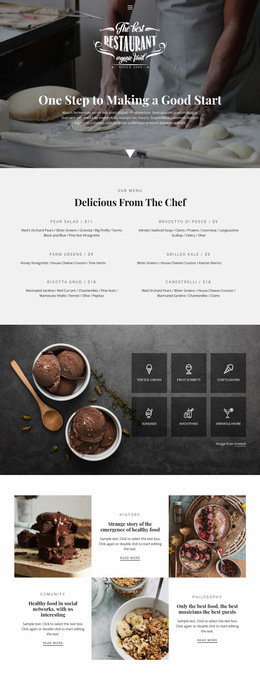
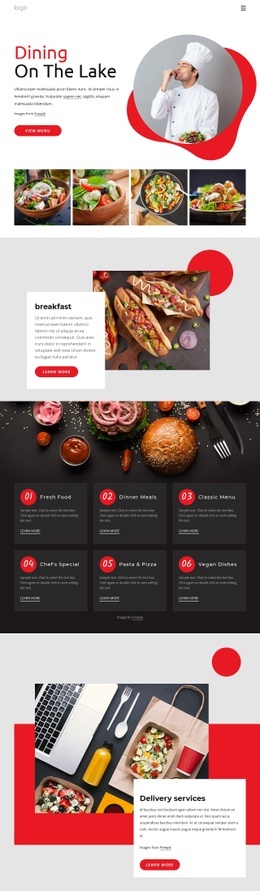
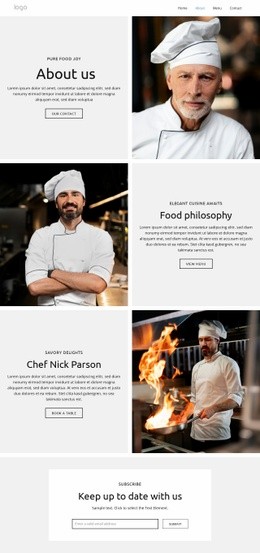
The page begins with a compact navigation strip and an asymmetric text-on-image hero, placing the restaurant statement and booking action beside large food photography. A white two-column introduction changes the visual density, then the chef feature returns to an image-led arrangement with supporting text and an interview link. These transitions prevent the page from presenting every message with the same width, background, or reading pace.
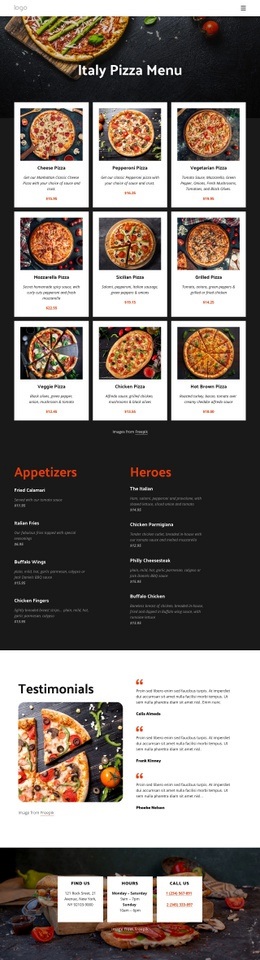
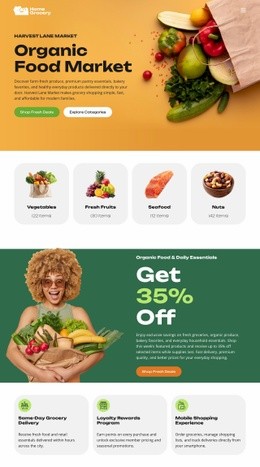
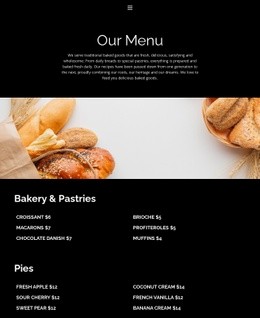
The two equal promotional panels create another compositional change before the six-card dining grid. Lunch, Dinner, Brunch, Barbook, Cocktails, and Desserts are presented as repeated white units over a food-themed background, making category navigation visually separate from the preceding story sections. The dinner menu then switches to two text columns, allowing starters, seafood towers, salads, Wagyu, entrees, and accessories to be read as organized information rather than decorative labels.
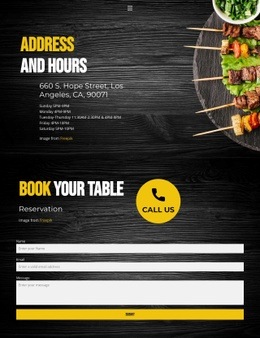
The closing Address and Hours section resolves the composition by pairing practical restaurant details with a reservation form. The listed 660 S. Hope Street, Los Angeles, CA, 90071 address and weekly opening hours occupy one side, while the booking interaction occupies the other. Coral, peach, black, white, and muted red accents connect these shifts, and the dark footer provides a firm visual endpoint. The page works through contrast, alternation, and increasing practical specificity.
Customize with Nicepage
Open this ready-made template in the Web Page Design Builder and customize it visually in the Nicepage editor. Replace demo content, edit page sections, and adapt the design to your project without rebuilding the template from scratch.
Design a Web Page Section by Section
Choose a Design for Each Section
Build the page from individual content sections instead of starting with a fixed full-page layout. Use Block Designs to browse ready-made sections for different purposes, including introductions, services, galleries, testimonials, contact forms, pricing, and other common parts of a web page. Search or filter the available designs to find a layout that fits the content you want to add.
Combine Blocks and Page Elements
Add selected Blocks to the page and arrange them in the order that supports the page's purpose. A hero section can introduce the main message, followed by services, benefits, portfolio content, testimonials, calls to action, or contact information.
Inside each section, use Web Page Elements such as Text, Image, Hyperlink, Grid, Gallery, and other elements to build and present the page content. Individual elements can be added and adjusted within the Blocks, giving you more control over the composition of each section without having to create the complete layout from scratch.
Refine the Page Layout and Flow
After assembling the main sections, adjust their content, spacing, backgrounds, images, typography, and element placement in the Nicepage editor. Reorder Blocks when necessary and refine the transition from one section to the next so the information hierarchy and visual flow remain clear throughout the page.
This workflow makes the template useful as a web page design that can be composed from ready-made sections, customized with individual page elements, rearranged, and adapted to the content and purpose of an individual page.