Rose Web Page Design
Edit Template Offline
2. Create new page and search for id 28597
Edit Template Online
Create Awesome Websites


Free Nicepage Builder
Keywords
Asymmetrical Panels Give Each Message Its Own Weight
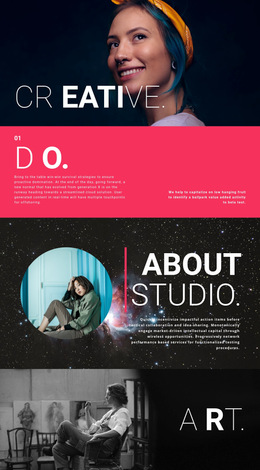
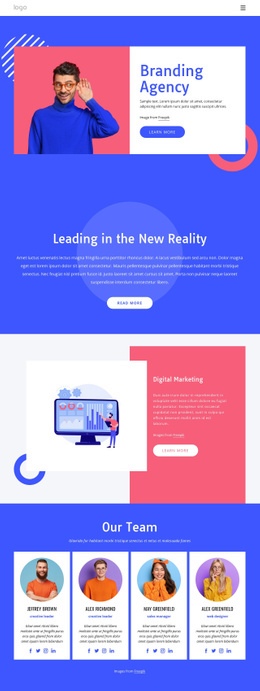
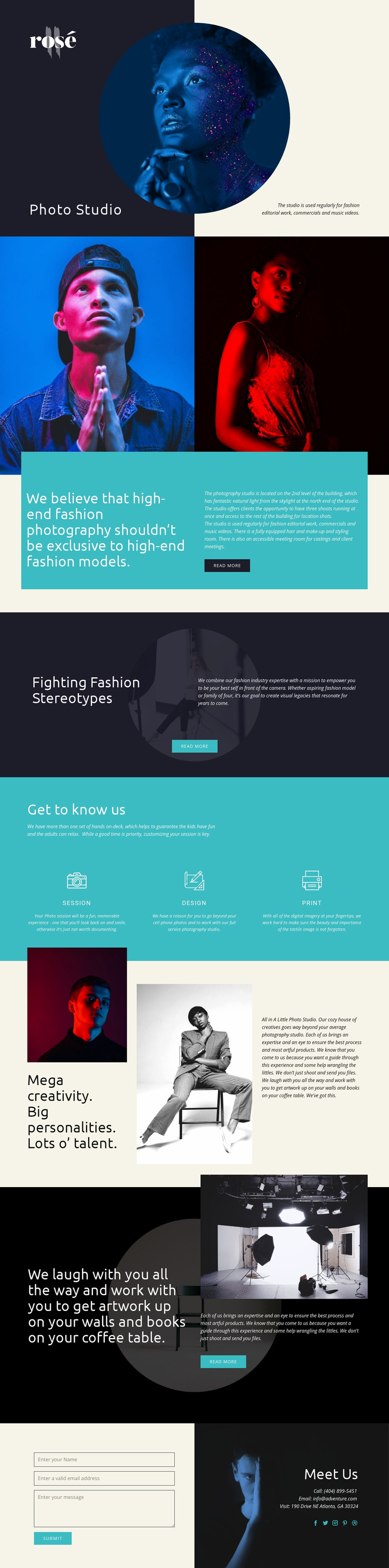
The page composition changes rhythm deliberately as the visitor moves through Rose. The opening split hero places text and image in adjacent color-blocked panels, but the circular portrait overlaps the section and prevents the layout from feeling like a simple two-column arrangement. The next block reduces the information density to two equal photographs, creating a visual pause before the longer studio narrative begins.
The facilities section uses two contrasting text panels, separating the inclusive fashion-photography statement from the supporting explanation and read-more action. That arrangement gives a large idea and its practical context different visual weights. The following full-width dark section repeats the strong statement treatment for “Fighting Fashion Stereotypes,” while the centered features block changes the page rhythm again through three evenly spaced columns for session, design, and print.
The thirds section introduces a mixed composition of headline image, portrait image, and longer text, then the final split block pairs the artwork statement with supporting photography and a call to action. The closing contact area resolves the sequence by placing the form beside a darker photographic panel containing contact information and social links. These transitions between image-led, text-led, columnar, and form-led sections create the page’s information hierarchy without requiring every block to use the same layout.
Customize with Nicepage
Open this ready-made template in the Web Page Design Builder and customize it visually in the Nicepage editor. Replace demo content, edit page sections, and adapt the design to your project without rebuilding the template from scratch.
Design a Web Page Section by Section
Choose a Design for Each Section
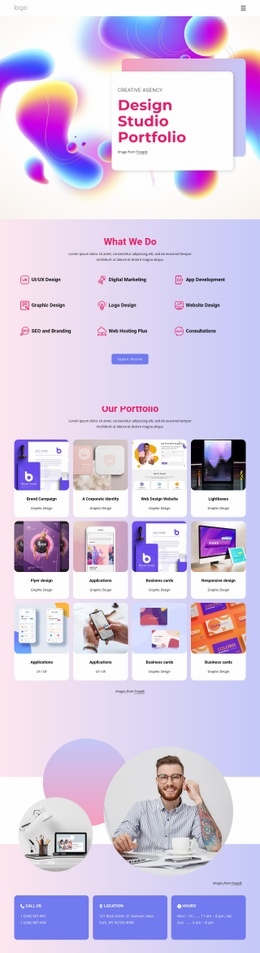
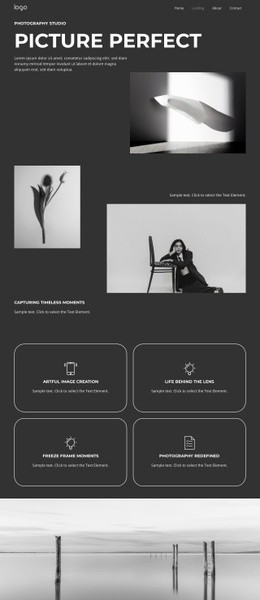
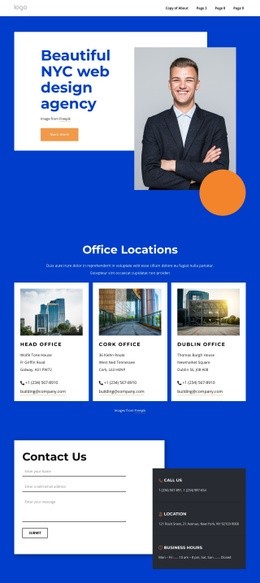
Build the page from individual content sections instead of starting with a fixed full-page layout. Use Block Designs to browse ready-made sections for different purposes, including introductions, services, galleries, testimonials, contact forms, pricing, and other common parts of a web page. Search or filter the available designs to find a layout that fits the content you want to add.
Combine Blocks and Page Elements
Add selected Blocks to the page and arrange them in the order that supports the page's purpose. A hero section can introduce the main message, followed by services, benefits, portfolio content, testimonials, calls to action, or contact information.
Inside each section, use Web Page Elements such as Text, Image, Hyperlink, Grid, Gallery, and other elements to build and present the page content. Individual elements can be added and adjusted within the Blocks, giving you more control over the composition of each section without having to create the complete layout from scratch.
Refine the Page Layout and Flow
After assembling the main sections, adjust their content, spacing, backgrounds, images, typography, and element placement in the Nicepage editor. Reorder Blocks when necessary and refine the transition from one section to the next so the information hierarchy and visual flow remain clear throughout the page.
This workflow makes the template useful as a web page design that can be composed from ready-made sections, customized with individual page elements, rearranged, and adapted to the content and purpose of an individual page.