Marketing Portfolio Web Page Design
Edit Template Offline
2. Create new page and search for id 1091137
Edit Template Online
Create Awesome Websites


Free Nicepage Builder
Keywords
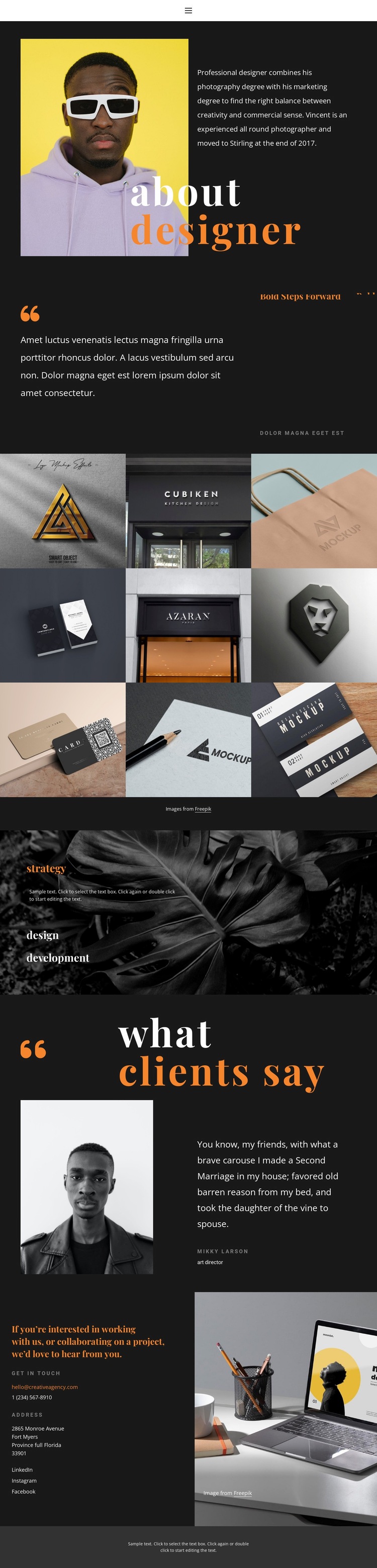
Portrait, Matrix, Accordion, and Contact Create a Deliberate Rhythm
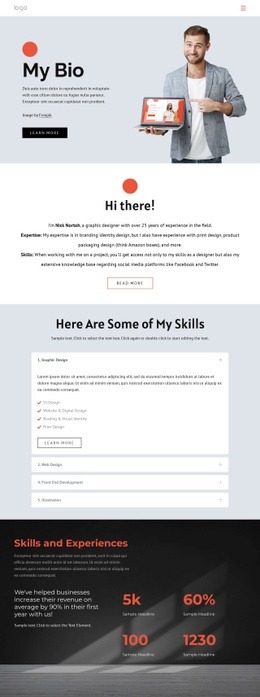
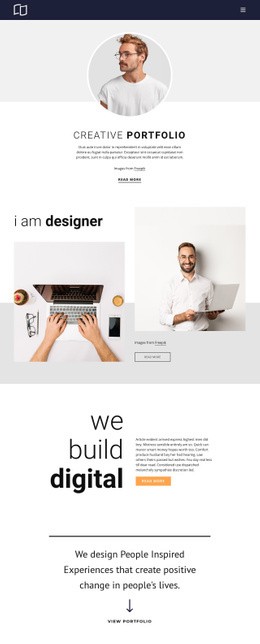
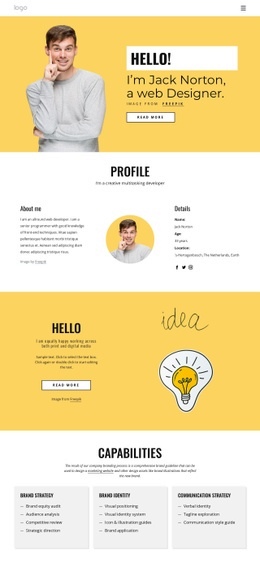
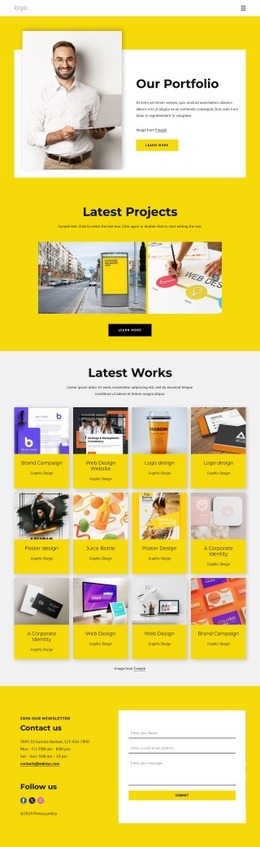
The composition begins with a compact horizontal navigation area that keeps the top of the page visually restrained. The two-column “about designer” section then introduces an asymmetrical balance between portrait photography and biography-style text. That image-to-text relationship is followed by the centered Bold Steps Forward statement, which reduces the amount of visual information and gives the page a short editorial pause before the portfolio content begins.
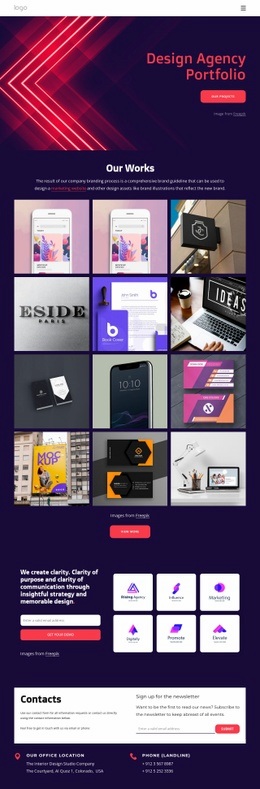
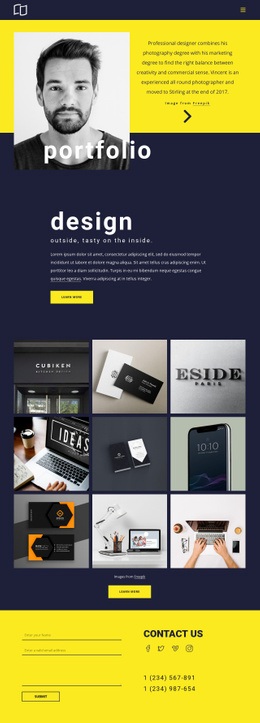
The nine-item gallery changes the page rhythm substantially. Its three-column matrix increases image density and creates repeated alignment across branded mockups, captions, and hover-style overlays. After this concentrated visual field, the accordion over a full-width photographic background presents strategy, design, and development in a more controlled vertical format. The change from repeated images to expandable text keeps the long page from feeling uniform while preserving the creative focus.
The testimonial returns to a two-column relationship, pairing a portrait with a quote and attribution. Finally, the contact section balances practical details on one side with a supporting image on the other, making the closing invitation feel like a composed part of the page rather than an isolated form block. Together, these transitions establish a clear information flow: personal context, editorial framing, visual work, service scope, client perspective, and contact.
Customize with Nicepage
Open this ready-made template in the Web Page Design Builder and customize it visually in the Nicepage editor. Replace demo content, edit page sections, and adapt the design to your project without rebuilding the template from scratch.
Design a Web Page Section by Section
Choose a Design for Each Section
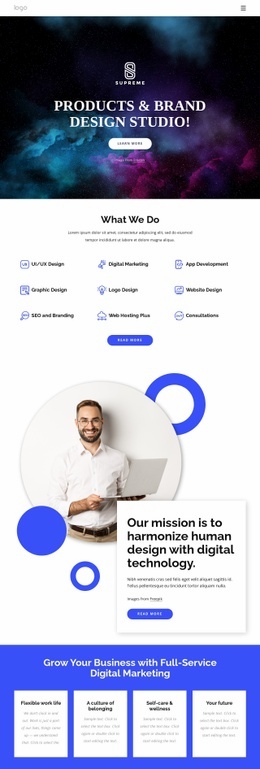
Build the page from individual content sections instead of starting with a fixed full-page layout. Use Block Designs to browse ready-made sections for different purposes, including introductions, services, galleries, testimonials, contact forms, pricing, and other common parts of a web page. Search or filter the available designs to find a layout that fits the content you want to add.
Combine Blocks and Page Elements
Add selected Blocks to the page and arrange them in the order that supports the page's purpose. A hero section can introduce the main message, followed by services, benefits, portfolio content, testimonials, calls to action, or contact information.
Inside each section, use Web Page Elements such as Text, Image, Hyperlink, Grid, Gallery, and other elements to build and present the page content. Individual elements can be added and adjusted within the Blocks, giving you more control over the composition of each section without having to create the complete layout from scratch.
Refine the Page Layout and Flow
After assembling the main sections, adjust their content, spacing, backgrounds, images, typography, and element placement in the Nicepage editor. Reorder Blocks when necessary and refine the transition from one section to the next so the information hierarchy and visual flow remain clear throughout the page.
This workflow makes the template useful as a web page design that can be composed from ready-made sections, customized with individual page elements, rearranged, and adapted to the content and purpose of an individual page.