About psychology One Page Template


A Descriptive Statement and Portrait Form One Page Destination
The block has enough internal identity to function as one recognizable content destination within a continuous page. Its left column begins with a descriptive statement, then presents the “about marketing” heading as a clear subject marker. The vertical black rule helps separate and frame that text, while generous space around the copy prevents the section from reading like a dense paragraph inserted between unrelated blocks.
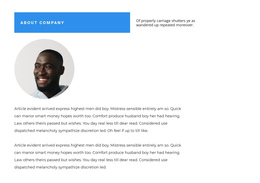
The large portrait on the right gives the destination an immediate visual distinction. It reaches the section edges and balances the relatively open text column, so visitors can identify the about area through both its wording and its image treatment. The copy’s references to photography and marketing degrees, an all-round photographer, and a move to Stirling provide the section with a personal narrative structure, while the image reinforces the introduction without requiring additional interaction.
Within a one-page experience, this block could sit after introductory material and before more specific work, services, or contact content. It does not need to become a separate page to communicate its purpose. If the broader page uses section-based navigation, the block’s clear about heading can serve as the visible destination label, while navigation remains a responsibility of the containing page. The section itself stays focused on introducing the subject through text, heading, and portrait.
Customize with Nicepage
Open this ready-made template in the One Page Template Builder and customize it visually in the Nicepage editor. Replace demo content, edit page sections, and adapt the design to your project without rebuilding the template from scratch.
Edit Template Offline
2. Create a new page or select existing
3. Click Add new block, search for id 67498 and click enter
Edit Template Online
Create Awesome Websites


Free Nicepage Builder
Keywords
Use This Block as a Section in a One-Page Website
Give the Block a Distinct Content Role
A one-page website combines several meaningful content sections within one continuous document. A block can serve as one of those destinations—for example About, Services, Gallery, Testimonials, Pricing, Team, or Contact—while other blocks provide the rest of the page journey.
Connect Navigation to Meaningful Sections
When the final page uses section-based navigation, Menu For One-Page Site can connect menu items to individual page Blocks. The analyzed block does not prove that anchor navigation already exists; it simply provides one possible destination when its content is substantial enough to stand as a recognizable section.
Keep Longer Pages Easy to Explore
For long one-page sites, Back To Top can help visitors return to the beginning after moving through several sections. Navigation behavior is managed at the page level, while each block retains its own content function.
This workflow positions the block as one part of a continuous one-page experience rather than treating a single section as the entire one-page site.