Things you must know about pizza HTML Template

Edit Template Offline
2. Create new page and search for id 6194310
Edit Template Online
Create Awesome Websites


Free Nicepage Builder
Keywords
Six menu cards turn the restaurant story into a finished page
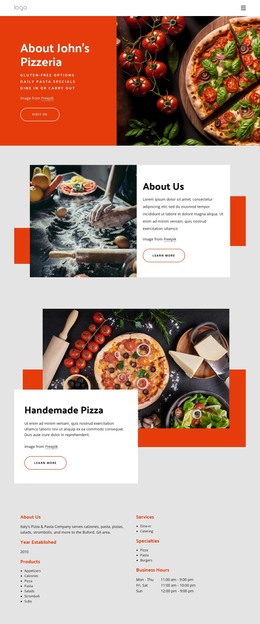
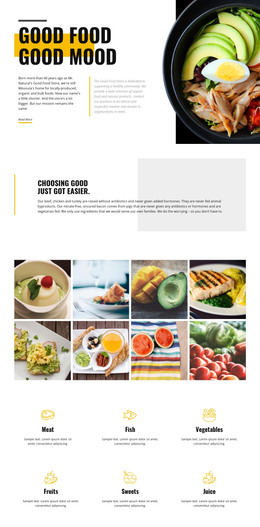
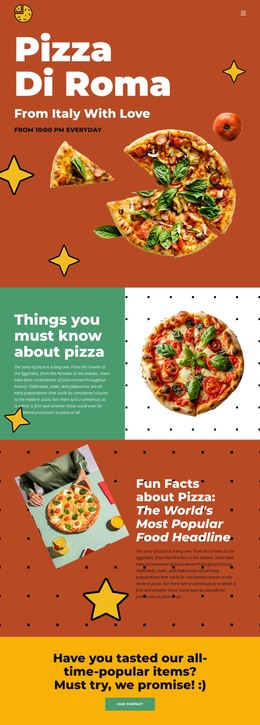
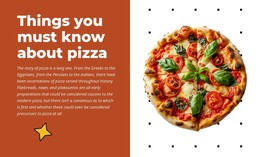
The page already brings together the major content needed for a self-contained restaurant presentation. The hero establishes Pizza Di Roma and its Italian positioning, while the explanatory pizza sections add context before visitors reach the food offering. This progression gives the static page more substance than a menu-only layout: it introduces the subject, explains the theme, creates appetite, and then presents specific dishes.
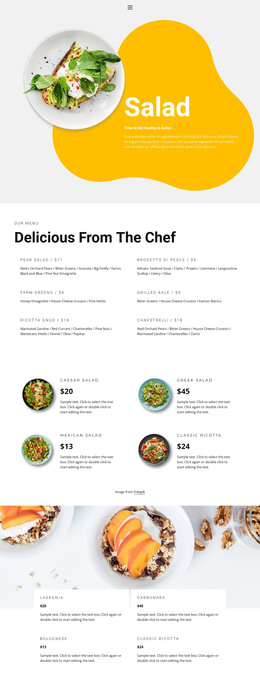
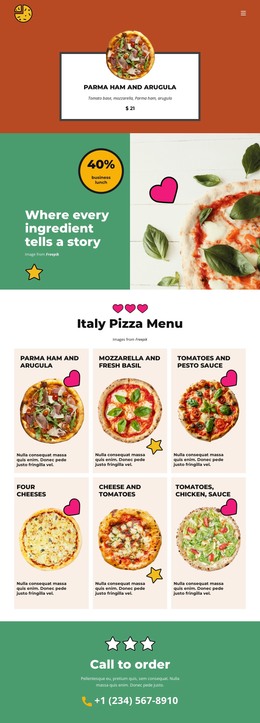
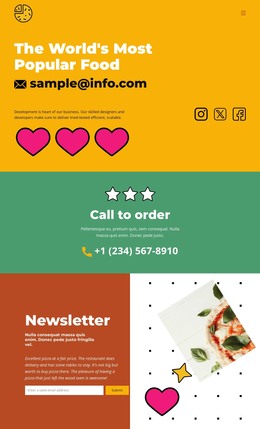
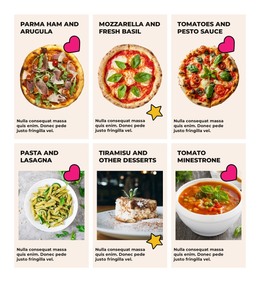
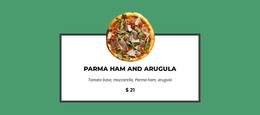
The six-card menu grid is the central content block. Parma ham and arugula, mozzarella and fresh basil, tomatoes and pesto sauce, pasta and lasagna, tiramisu and other desserts, and tomato minestrone create a broad sample of the restaurant’s offer. Because the names are paired with food photography, the section can function as a finished visual menu area even though the descriptions are generic demo copy. Three testimonial panels then add a separate layer of customer-experience content, and the newsletter area supplies a closing subscription action. Together, these sections form a complete static restaurant page that can be adapted with real menu descriptions, contact details, ordering links, and subscription content without rebuilding its main arrangement.
Customize with Nicepage
Open this ready-made template in the HTML Builder and customize it visually in the Nicepage editor. Replace demo content, edit page sections, and adapt the design to your project without rebuilding the template from scratch.
Export and Use This Template as an HTML Website
Create a Portable HTML Website
When the template is ready, use the HTML Export option to create a static website with the files required for deployment. The exported website can be used independently of the Nicepage editor and deployed on your preferred hosting.
Nicepage also provides SEO settings and optimization features, including Page Titles and Descriptions, Canonical settings, headings, image Alt Text, and other page-level properties that help prepare the website for search engines.
Deploy Without a CMS
Upload the finished website to the hosting environment that fits your project. Because the exported site does not require WordPress, Joomla, or another CMS to deliver its pages, it can be placed on your own server, uploaded to a hosting provider, or deployed through an existing web infrastructure.
Hand Off the Website Files
The generated website files can also be provided to a client, developer, or hosting team. They remain available outside the Nicepage editor for deployment, technical review, or project-specific development when additional work is required.
This workflow makes the template a practical foundation for a portable static website that can be exported from the Nicepage editor and deployed independently.

Design Set (14)
-

-
-
-
-
-
-
-
Free Website Builder SoftwareDownload
-
-
-
-




More from Food & Restaurant HTML Templates
-
Free Website Builder SoftwareDownload