We make decisions for the long-term HTML Template


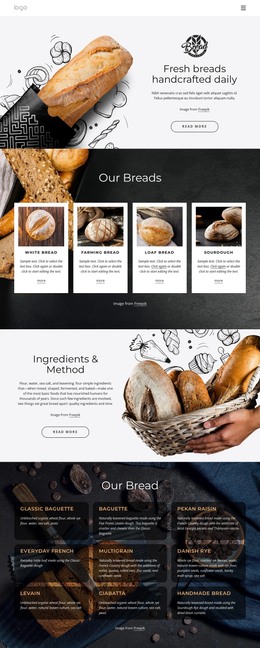
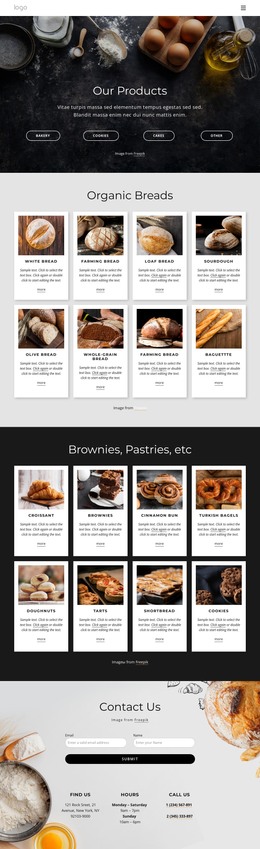
Nine Bread Cards Create a Ready-Made Static Product Section
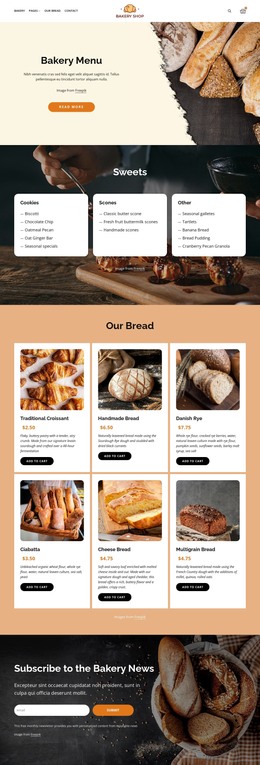
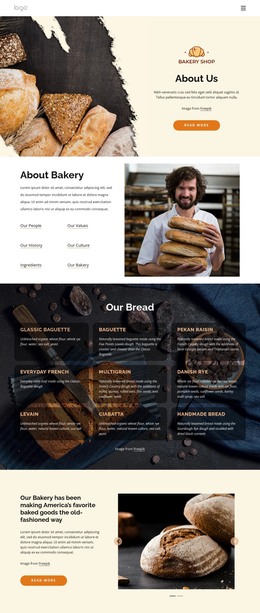
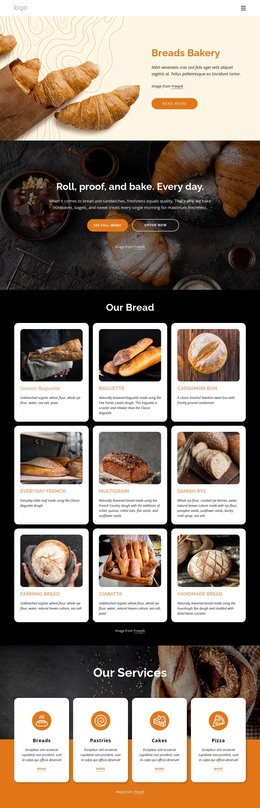
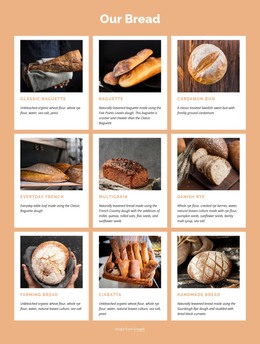
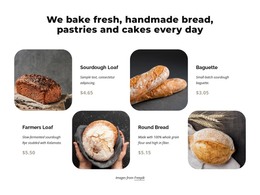
The “Our Bread” heading introduces a complete product-focused content area, followed by nine repeated cards arranged in three columns and three rows. Names such as Baguette, Pekan Raisin, Multigrain, Danish Rye, Levain, Ciabatta, and Handmade Bread give the grid a recognizable bakery structure, while the accompanying descriptions explain ingredients or preparation methods. The repeated card pattern lets visitors compare several offerings within one bounded section instead of moving through a long sequence of unrelated text.
Used inside a static HTML page or site, this block can carry the product-listing role for a bakery or food-service layout while surrounding sections provide navigation, introductory content, ordering details, or contact information. The full-width bread-themed photograph supplies atmosphere behind the grid, and the translucent dark card surfaces separate each product from the detailed image. White headings, warm tan titles, and light italic descriptions create a consistent visual hierarchy that remains attached to the section’s product content. The result is a prepared static section arrangement: its bread catalog structure is already defined, while the containing HTML project determines where it appears and what other content accompanies it.
Customize with Nicepage
Open this ready-made template in the HTML Builder and customize it visually in the Nicepage editor. Replace demo content, edit page sections, and adapt the design to your project without rebuilding the template from scratch.
Edit Template Offline
2. Create a new page or select existing
3. Click Add new block, search for id 3275982 and click enter
Edit Template Online
Create Awesome Websites


Free Nicepage Builder
Keywords
Export and Use This Template as an HTML Website
Create a Portable HTML Website
When the template is ready, use the HTML Export option to create a static website with the files required for deployment. The exported website can be used independently of the Nicepage editor and deployed on your preferred hosting.
Nicepage also provides SEO settings and optimization features, including Page Titles and Descriptions, Canonical settings, headings, image Alt Text, and other page-level properties that help prepare the website for search engines.
Deploy Without a CMS
Upload the finished website to the hosting environment that fits your project. Because the exported site does not require WordPress, Joomla, or another CMS to deliver its pages, it can be placed on your own server, uploaded to a hosting provider, or deployed through an existing web infrastructure.
Hand Off the Website Files
The generated website files can also be provided to a client, developer, or hosting team. They remain available outside the Nicepage editor for deployment, technical review, or project-specific development when additional work is required.
This workflow makes the template a practical foundation for a portable static website that can be exported from the Nicepage editor and deployed independently.

Design Set (18)
-

-
-
-
Free Website Builder SoftwareDownload
-
-
-
-
-
-
-
-

More from Food & Restaurant Blocks
-
-
-
-
-
-
-
-
-
-
-
Free Website Builder SoftwareDownload
-
-
-
-
-
-
-
-
-
-
More from Grid Repeater Blocks
-
-
-
-
-
-
-
-
-
-
-
Free Website Builder SoftwareDownload
-
-
-
-
-
-
-
-
-
-