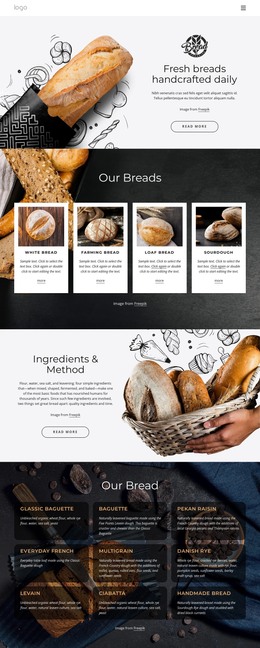
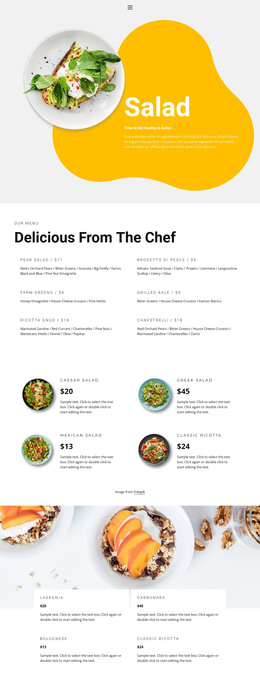
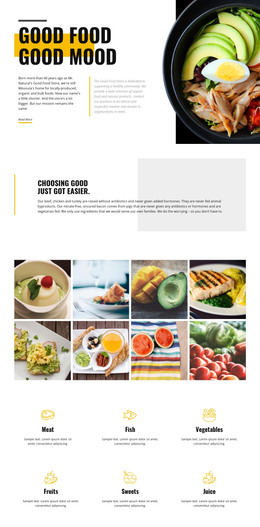
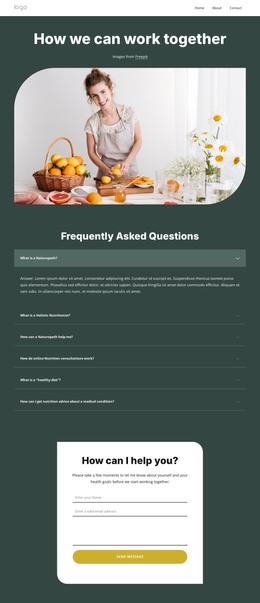
Breads bakery NYC HTML Template



Edit Template Offline
2. Create new page and search for id 3264603
Edit Template Online
Create Awesome Websites


Free Nicepage Builder
Keywords
The Bakery Story Already Forms a Complete Static Page
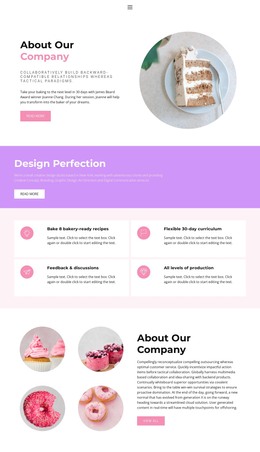
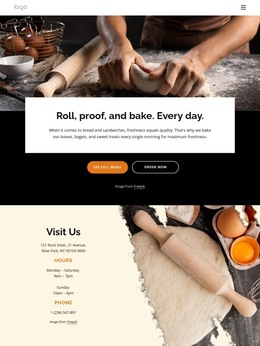
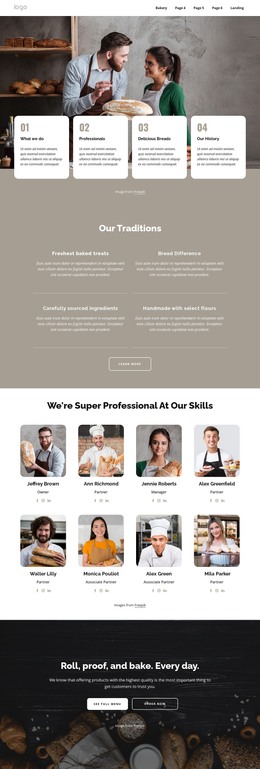
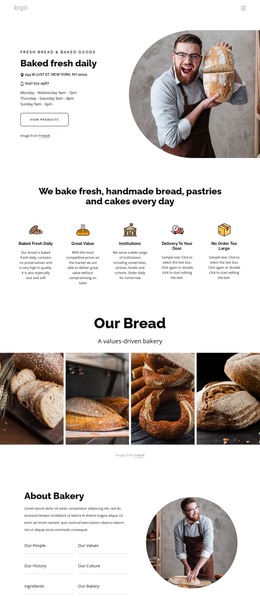
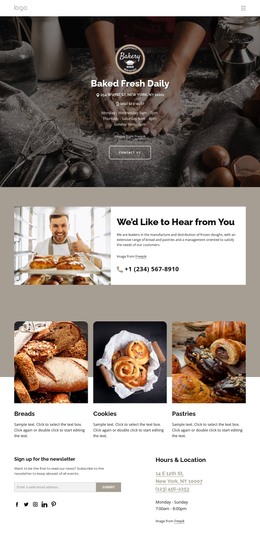
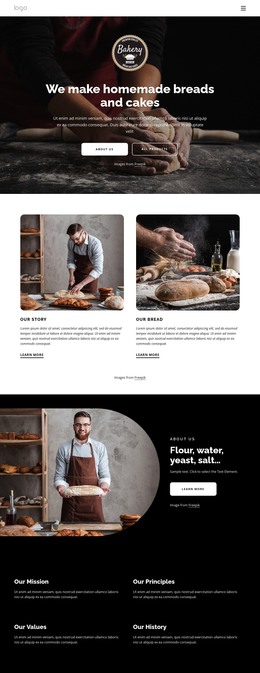
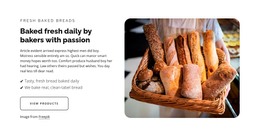
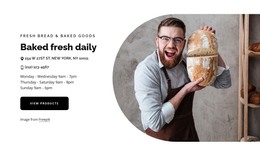
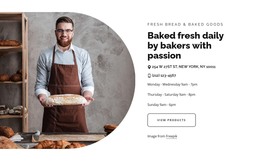
The opening hero establishes the bakery’s message and immediately connects it with product browsing, contact information, and hours. From there, the page moves into five benefit items, a bread gallery, bakery values, and quality-focused content before presenting eight rounded product cards. This sequence gives a static HTML implementation more than an attractive opening screen: it supplies the main content groups needed to explain the bakery, show its products, build confidence, and provide ways to respond.
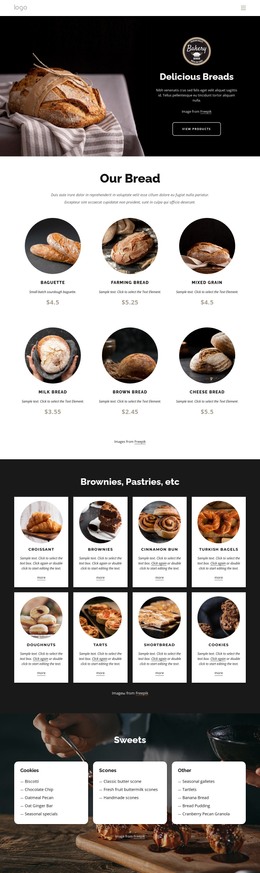
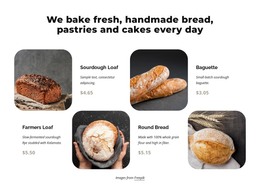
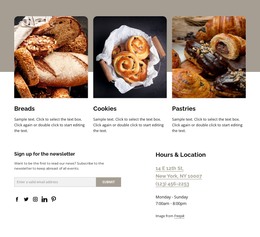
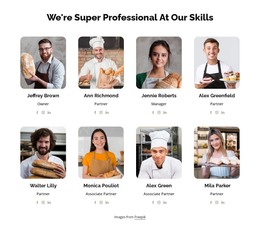
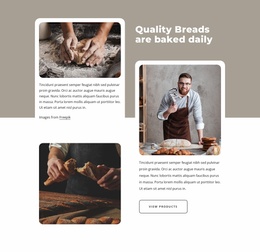
The product cards make the assortment concrete through categories such as croissants, brownies, cinnamon buns, Turkish bagels, doughnuts, tarts, shortbread, and cookies. Six testimonial entries then add a separate layer of customer-oriented content, while the final newsletter and Hours & Location area gives the page a practical closing point. Two subscription forms and the dark footer extend that closing logic with repeated access to contact and subscription actions. Because these parts are already arranged as a connected presentation, the design can serve as a standalone static bakery page rather than only a visual concept requiring its core content to be assembled. The gallery and rounded imagery also give the finished HTML page a strong visual rhythm, balancing explanatory copy with product-focused photography.
Customize with Nicepage
Open this ready-made template in the HTML Builder and customize it visually in the Nicepage editor. Replace demo content, edit page sections, and adapt the design to your project without rebuilding the template from scratch.
Export and Use This Template as an HTML Website
Create a Portable HTML Website
When the template is ready, use the HTML Export option to create a static website with the files required for deployment. The exported website can be used independently of the Nicepage editor and deployed on your preferred hosting.
Nicepage also provides SEO settings and optimization features, including Page Titles and Descriptions, Canonical settings, headings, image Alt Text, and other page-level properties that help prepare the website for search engines.
Deploy Without a CMS
Upload the finished website to the hosting environment that fits your project. Because the exported site does not require WordPress, Joomla, or another CMS to deliver its pages, it can be placed on your own server, uploaded to a hosting provider, or deployed through an existing web infrastructure.
Hand Off the Website Files
The generated website files can also be provided to a client, developer, or hosting team. They remain available outside the Nicepage editor for deployment, technical review, or project-specific development when additional work is required.
This workflow makes the template a practical foundation for a portable static website that can be exported from the Nicepage editor and deployed independently.

Design Set (22)
-

-
-
-
Free Website Builder SoftwareDownload
-
-
-
-
-
-
-
-
-
-
-
-


More from Food & Restaurant HTML Templates
-
Free Website Builder SoftwareDownload