Mountain hiking travel Html Code Example


Edit Template Offline
2. Create new page and search for id 32104
Edit Template Online
Create Awesome Websites


Free Nicepage Builder
Keywords
The Tour Carousel and Destination Areas Create Clear Extension Points
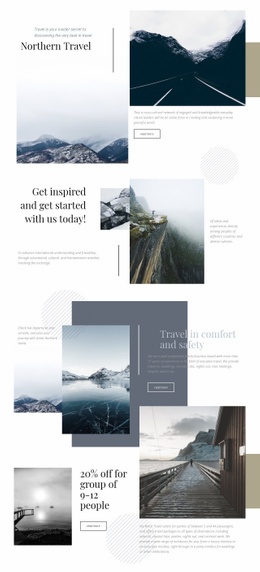
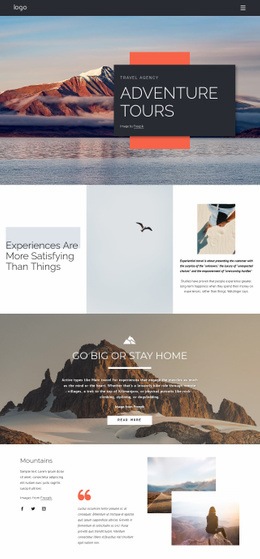
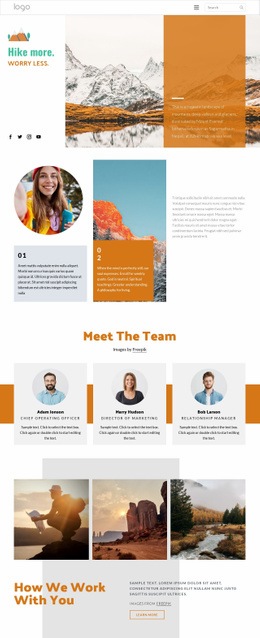
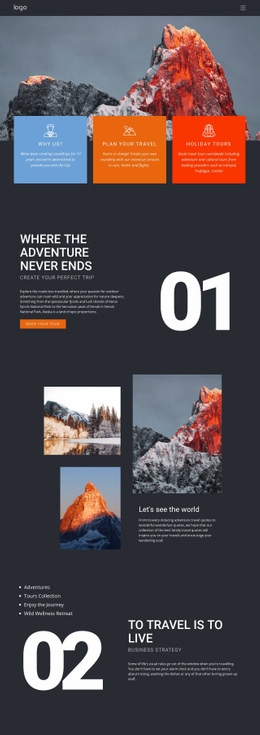
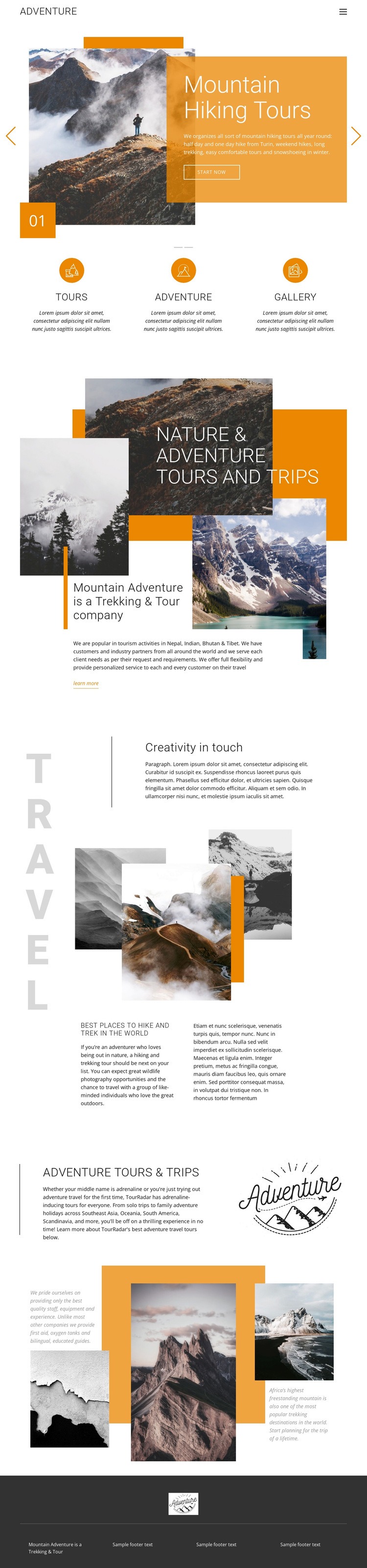
The two-slide featured carousel is the most obvious place for project-specific extension because it already separates mountain imagery, tour descriptions, slide numbering, navigation controls, and Start now actions into a focused presentation area. A project could preserve that arrangement while introducing an external booking, availability, or tour-detail component beside the existing action path when standard content is not enough.
Other sections provide different integration contexts. The three highlighted categories—Tours, Adventure, and Gallery—can remain concise entry points, while the About Us and Best places to hike and trek sections offer richer content zones for additional destination information or a related media component. The final three-image collage can support a visual destination presentation without replacing the page’s editorial rhythm. The compact header and mobile-navigation affordance also identify where expanded navigation or a project-specific search element might belong, although no such custom code is claimed to be present.
This makes the page suitable for selective custom extension rather than wholesale reconstruction. Custom functionality can be placed beside the relevant carousel, content, or gallery area while the orange panels, overlapping mountain imagery, vertical labels, and dark footer continue to provide the established visual context. The design therefore offers recognizable integration points for functionality that must sit alongside the existing travel presentation.
Customize with Nicepage
Open this ready-made template in the HTML Code Generator and customize it visually in the Nicepage editor. Replace demo content, edit page sections, and adapt the design to your project without rebuilding the template from scratch.
Extend This Page With Custom HTML Code
Insert Code With the HTML Element
Use the HTML Element to add custom code directly to a Block in the Nicepage editor. Enter the required markup in the Code field when the page needs content or functionality that is not available through the standard page elements.
Place the HTML Element in the Layout
Treat the HTML Element as part of the visual page composition. Adjust its position, width, height, alignment, and margins to place the custom content where it belongs alongside text, images, buttons, and other elements. This makes it possible to combine visually edited sections with project-specific code without separating the custom element from the rest of the layout.
Add HTML, CSS, JavaScript, and External Components
The HTML Element supports HTML, CSS, and JavaScript, allowing you to extend the page with custom markup and interactive functionality. It can also be used to embed custom code and third-party components, such as social feeds, advertising code, widgets, or other external functionality required by the project.
This workflow makes the template useful for projects that need a visual page editor together with custom HTML code, JavaScript, embedded components, and functionality beyond the standard page elements.

More from Travel & Hotels Html Code Examples
-
Customize Any TemplateDownload