Text and social icons Html Code Example


The social-links panel creates a bounded extension area
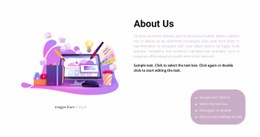
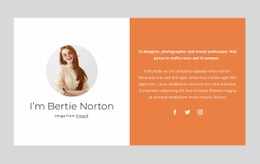
The broad text region already establishes the block’s central purpose through the “About Work” heading and two paragraphs. Beside it, the narrow purple panel groups the Facebook, Twitter, and Instagram links into a clearly separated interaction area. That separation is useful when a project needs to consider optional custom functionality: an external widget, tracking treatment, or project-specific content could be associated with the social region without disturbing the explanatory copy on the left.
The existing block remains static, so custom code should be treated as a possible extension rather than part of the current section. The light-gray text panel can continue to carry the about/work message, while the colored panel provides a visually obvious place for social-related additions or link behavior. Keeping any added element within the relevant region helps maintain the original distinction between reading content and social access.
This HTML Code angle is therefore about extending a real content boundary, not replacing the block with a new structure. The two-column relationship, paragraph hierarchy, and three identified social links provide enough organization to judge where additional markup could fit while preserving the section’s compact horizontal composition.
Customize with Nicepage
Open this ready-made template in the HTML Code Generator and customize it visually in the Nicepage editor. Replace demo content, edit page sections, and adapt the design to your project without rebuilding the template from scratch.
Edit Template Offline
2. Create a new page or select existing
3. Click Add new block, search for id 1317515 and click enter
Edit Template Online
Create Awesome Websites


Free Nicepage Builder
Keywords
Extend This Page With Custom HTML Code
Insert Code With the HTML Element
Use the HTML Element to add custom code directly to a Block in the Nicepage editor. Enter the required markup in the Code field when the page needs content or functionality that is not available through the standard page elements.
Place the HTML Element in the Layout
Treat the HTML Element as part of the visual page composition. Adjust its position, width, height, alignment, and margins to place the custom content where it belongs alongside text, images, buttons, and other elements. This makes it possible to combine visually edited sections with project-specific code without separating the custom element from the rest of the layout.
Add HTML, CSS, JavaScript, and External Components
The HTML Element supports HTML, CSS, and JavaScript, allowing you to extend the page with custom markup and interactive functionality. It can also be used to embed custom code and third-party components, such as social feeds, advertising code, widgets, or other external functionality required by the project.
This workflow makes the template useful for projects that need a visual page editor together with custom HTML code, JavaScript, embedded components, and functionality beyond the standard page elements.

More from About Us Blocks
-

-

-
-
-
-
-
-
-
-
-
Customize Any TemplateDownload
-
-
-
-
-
-
-
-
-
-