School of Psychology HTML5 Template

Edit Template Offline
2. Create new page and search for id 6225099
Edit Template Online
Create Awesome Websites


Free Nicepage Builder
Keywords
From the Consultation Hero to the Closing Contact Block
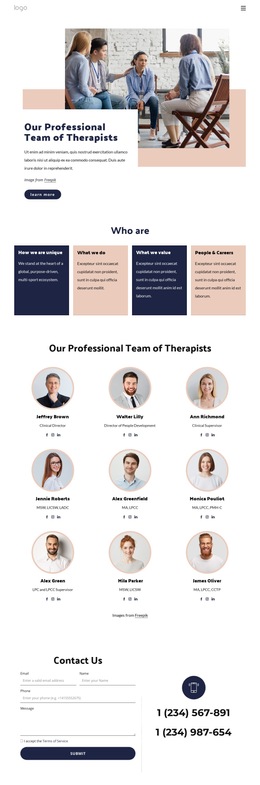
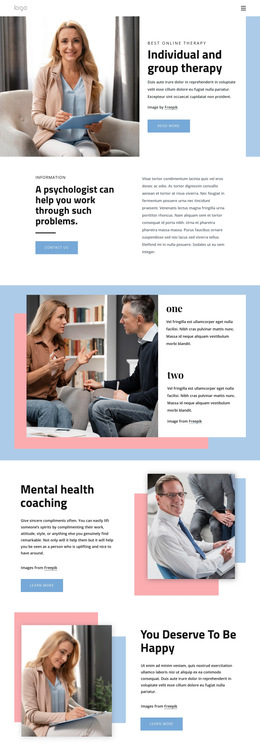
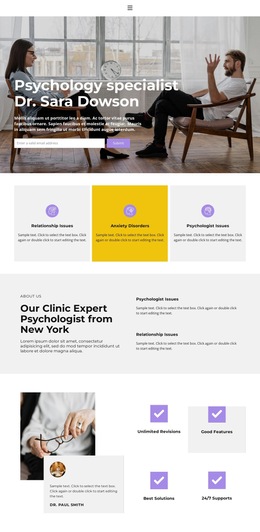
The page is organized as a readable progression rather than a flat collection of elements. The opening Text On Image block combines the specialist heading, introductory copy, consultation photograph, and email inquiry form, establishing the first content group. Three equal service cards follow as a repeated set, making the main issue categories easy to inspect as one structural unit.
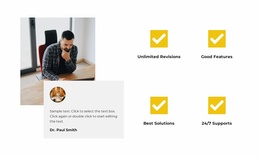
The two-column clinic introduction changes the rhythm by pairing a general introductory panel with issue-specific copy. A later grid combines a large portrait and quote card with four feature tiles, creating a nested relationship between visual proof and supporting information. The appointment strip then forms a separate callout block, followed by an accordion that contains four expandable items beside a photograph. These blocks create increasingly specific content zones without requiring unsupported assumptions about their underlying HTML tags.
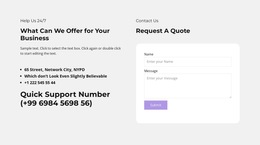
The three-plan comparison is another distinct structural group, with plan names, displayed pricing content, feature lists, and action buttons arranged as adjacent cards. The therapy benefits split section returns to explanatory content before the final two-column contact area and dark footer. Viewed as an HTML5 page hierarchy, the template’s value lies in how Headers, content blocks, repeated groups, forms, and the Footer can be inspected as related levels of one long page.
Customize with Nicepage
Open this ready-made template in the HTML5 Template Builder and customize it visually in the Nicepage editor. Replace demo content, edit page sections, and adapt the design to your project without rebuilding the template from scratch.
Explore This HTML5 Template Structure
Navigate the Page Structure
Customize this ready-made HTML5 template visually in the Nicepage editor while keeping its page organization easy to understand. Use the Layers panel to view the hierarchy of the Header, Blocks, Containers, Elements, and Footer, navigate between different parts of the page, and quickly select items within the layout.
The Layers panel also provides practical controls for working with more complex pages. Blocks, Containers, and Elements can be renamed for easier identification, temporarily hidden while editing, or locked to prevent accidental changes. The outline can also expose the internal structure of elements such as Menus and Contact Forms.
Work With Organized Page Sections
Blocks divide the page into major content sections, while Containers and Elements organize the content inside them. Keeping this hierarchy visible makes it easier to understand how individual parts of the page relate to one another, especially when a layout contains many nested elements.
You can use the Layers panel to move through this structure instead of selecting everything directly on the canvas, making complex layouts easier to inspect and manage as an organized page hierarchy.
Review and Extend the HTML
After customizing the page visually, the resulting HTML can be reviewed and adapted when code-level changes are required. If a project needs additional markup or functionality beyond the standard page elements, use the HTML Element to add targeted custom HTML where necessary.
This workflow combines visual editing with a clear view of the page hierarchy, making the template useful both as a ready-made design and as an HTML5 project whose structure can be inspected, managed, adapted, and extended.

Design Set (14)
-

-
-
-
-
-
-
-
Free Website Builder SoftwareDownload
-
-
-
-








More from Medicine & Science HTML5 Templates
-
Free Website Builder SoftwareDownload