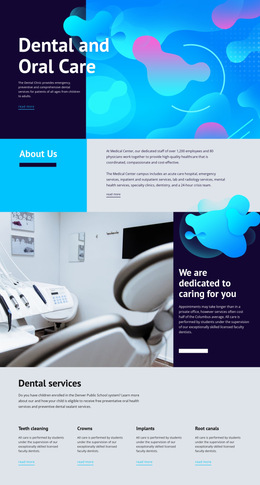
High quality dental services HTML5 Template
Edit Template Offline
2. Create new page and search for id 326416
Edit Template Online
Create Awesome Websites


Free Nicepage Builder
Keywords
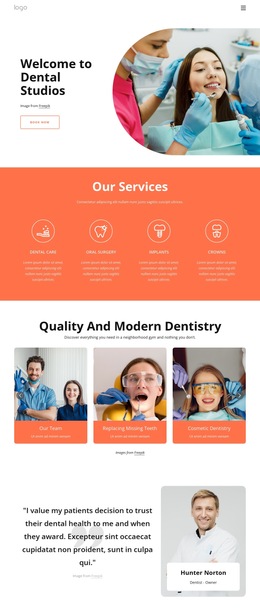
From Care Introduction to Contact, the Page Has a Visible Hierarchy
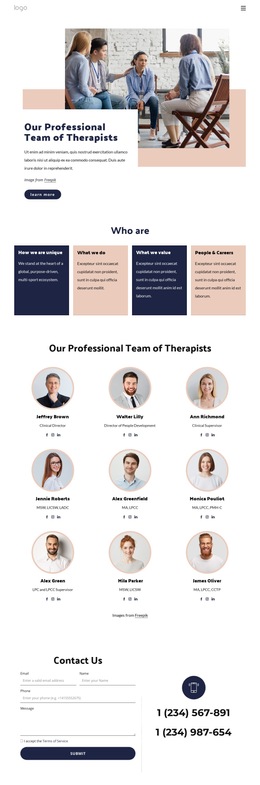
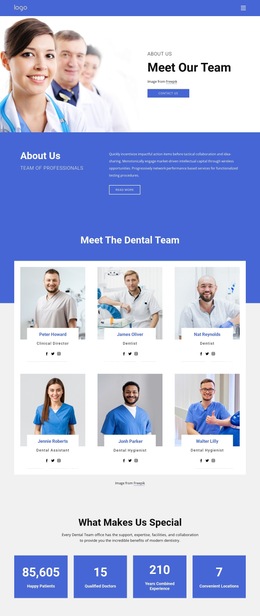
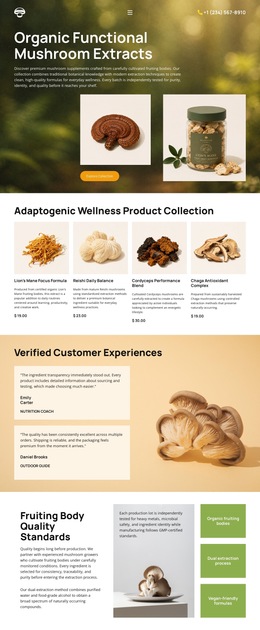
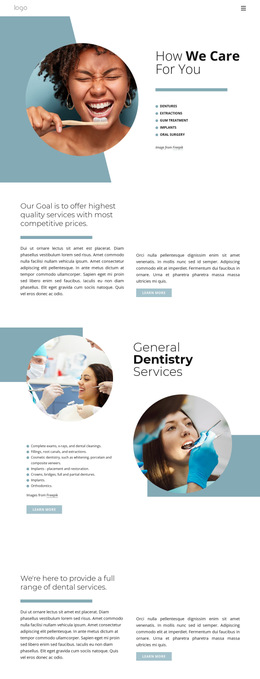
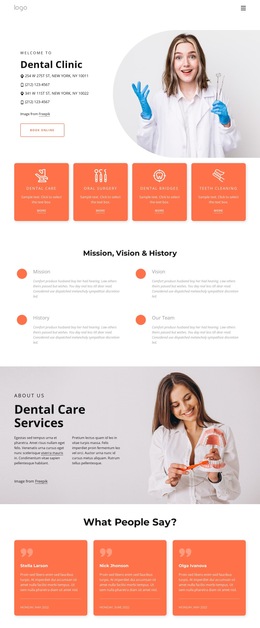
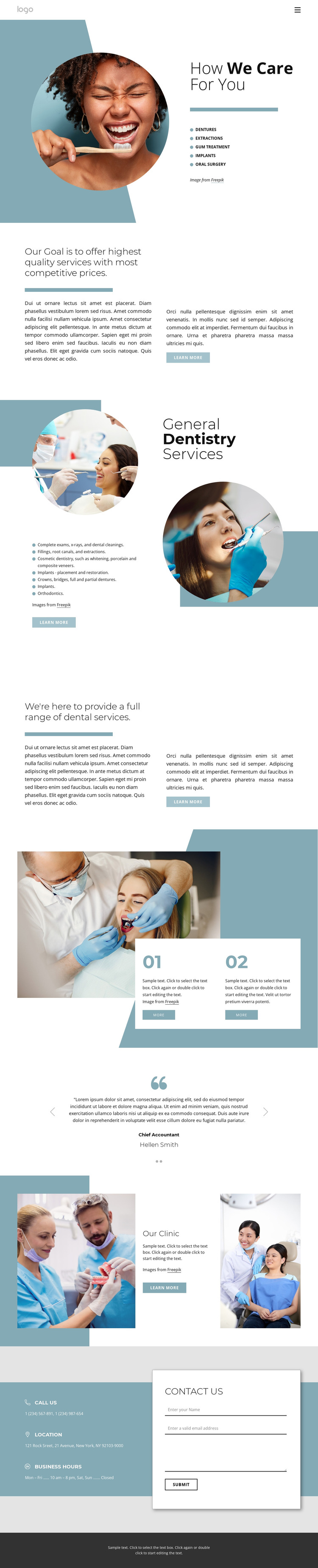
The page can be read as a sequence of distinct content groups rather than as a flat collection of elements. A horizontal navigation row establishes the entry point, followed by the How We Care For You section, where a circular image sits beside a service list. The next text-and-button block states the clinic's quality and value message before the General Dentistry Services section expands the information into a more detailed list. This progression moves from orientation to explanation and then to coverage.
The later hierarchy adds a full-range services statement, two numbered information cards, and a testimonial carousel with two slides. The Our Clinic block then changes the emphasis from treatment categories to the clinic itself, using photographs on either side of a central text panel. Finally, the Contact Us block places the inquiry form beside three stacked information cards, creating a clearly identifiable closing area before the footer. Repeated Learn more and More actions connect related content without obscuring the major section boundaries. This organization makes the HTML5 page easier to inspect as a series of purposeful Blocks and nested content relationships, while the visual details remain supporting evidence rather than the main structural argument.
Customize with Nicepage
Open this ready-made template in the HTML5 Template Builder and customize it visually in the Nicepage editor. Replace demo content, edit page sections, and adapt the design to your project without rebuilding the template from scratch.
Explore This HTML5 Template Structure
Navigate the Page Structure
Customize this ready-made HTML5 template visually in the Nicepage editor while keeping its page organization easy to understand. Use the Layers panel to view the hierarchy of the Header, Blocks, Containers, Elements, and Footer, navigate between different parts of the page, and quickly select items within the layout.
The Layers panel also provides practical controls for working with more complex pages. Blocks, Containers, and Elements can be renamed for easier identification, temporarily hidden while editing, or locked to prevent accidental changes. The outline can also expose the internal structure of elements such as Menus and Contact Forms.
Work With Organized Page Sections
Blocks divide the page into major content sections, while Containers and Elements organize the content inside them. Keeping this hierarchy visible makes it easier to understand how individual parts of the page relate to one another, especially when a layout contains many nested elements.
You can use the Layers panel to move through this structure instead of selecting everything directly on the canvas, making complex layouts easier to inspect and manage as an organized page hierarchy.
Review and Extend the HTML
After customizing the page visually, the resulting HTML can be reviewed and adapted when code-level changes are required. If a project needs additional markup or functionality beyond the standard page elements, use the HTML Element to add targeted custom HTML where necessary.
This workflow combines visual editing with a clear view of the page hierarchy, making the template useful both as a ready-made design and as an HTML5 project whose structure can be inspected, managed, adapted, and extended.

More from Medicine & Science HTML5 Templates
-
Free Website Builder SoftwareDownload